
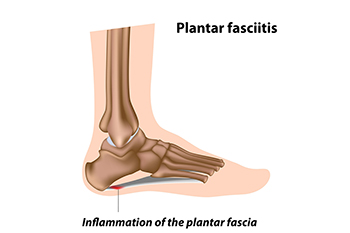
Plantar fasciitis is one of the most common causes of heel pain. It affects individuals who place repetitive stress on the bottom of the foot. It occurs when the plantar fascia, a thick band of connective tissue that supports the arch, becomes irritated or develops micro-tears. This tissue runs from the heel bone to the toes and plays a vital role in maintaining proper foot mechanics. A key concept in understanding this condition is called the windlass mechanism. This describes how the plantar fascia tightens as the toes extend while walking, helping to stabilize the arch and create an efficient push-off phase.
Symptoms of plantar fasciitis typically include sharp heel pain that is most noticeable with the first steps in the morning or after periods of rest. The discomfort may decrease with activity but often returns after prolonged standing or walking. Patients may also report stiffness in the arch, tenderness along the heel, and increased pain after exercise rather than during it. These symptoms are often linked to strain within the plantar fascia and dysfunction in the windlass mechanism, which reduces the foot’s ability to absorb and distribute forces effectively.
Several risk factors contribute to the development of plantar fasciitis. Individuals with flat feet or high arches may experience abnormal stress on the plantar fascia. Occupations that require prolonged standing, such as teaching or retail work, can increase strain on the heel. Wearing improper footwear, especially shoes with poor arch support, can further disrupt foot mechanics. Tight calf muscles and limited ankle mobility may also interfere with the windlass mechanism, placing additional tension on the plantar fascia during movement.
It is important to know that plantar fasciitis is both a structural and functional condition that benefits from early attention and proper support. Understanding how the windlass mechanism contributes to foot stability highlights the importance of maintaining flexibility and strength in the lower extremity. If you have symptoms of plantar fasciitis, it is suggested you consult a podiatrist for effective relief and treatment solutions.
Plantar fasciitis can be very painful and inconvenient. If you are experiencing heel pain or symptoms of plantar fasciitis, contact One of our podiatrists from Dr. Powers Foot and Ankle. Our doctors can provide the care you need to keep you pain-free and on your feet.
What Is Plantar Fasciitis?
Plantar fasciitis is the inflammation of the thick band of tissue that runs along the bottom of your foot, known as the plantar fascia, and causes mild to severe heel pain.
What Causes Plantar Fasciitis?
How Can It Be Treated?
While very treatable, plantar fasciitis is definitely not something that should be ignored. Especially in severe cases, speaking to your doctor right away is highly recommended to avoid complications and severe heel pain. Your podiatrist can work with you to provide the appropriate treatment options tailored to your condition.
If you have any questions, please feel free to contact one of our offices located in Bloomington and Washington, IN . We offer the newest diagnostic and treatment technologies for all your foot care needs.
Read more about Plantar Fasciitis
Plantar fasciitis is one of the most common causes of heel pain. The plantar fascia is the thick band of tissue that connects the heel bone to the toes. When this band of connective tissue becomes inflamed, plantar fasciitis occurs. Fortunately, this condition is treatable.
There are several factors that may put you at a greater risk for developing plantar fasciitis. One of the biggest factors is age; plantar fasciitis is common in those between the ages of 40 to 60. People who have jobs that require them to be on their feet are also likely to develop plantar fasciitis. This includes factory workers, teachers, and others who spend a large portion of their day walking around on hard surfaces. Another risk factor is obesity because excess weight can result in extra stress being placed on the plantar fascia.
People with plantar fasciitis often experience a stabbing pain in the heel area. This pain is usually at its worst in the morning, but can also be triggered by periods of standing or sitting. Plantar fasciitis may make it hard to run and walk. It may also make the foot feel stiff and sensitive, which consequently makes walking barefoot difficult.
Treatment for plantar fasciitis depends on the severity of the specific case of the condition. Ice massage applications may be used to reduce pain and inflammation. Physical therapy is often used to treat plantar fasciitis, and this may include stretching exercises. Another treatment option is anti-inflammatory medication, such as ibuprofen.
If you suspect that you have plantar fasciitis, meet with your podiatrist immediately. If left untreated, symptoms may lead to tearing and overstretching of the plantar fascia. The solution is early detection and treatment. Be sure to speak with your podiatrist if you are experiencing heel pain.

A bunion can change the way a person walks by shifting pressure across the foot and altering balance. In middle-aged and older adults, this misalignment may lead to discomfort, reduced stability, slower walking, and a greater risk of falls. When conservative care no longer provides relief, surgical bunion correction may help restore better foot positioning and improve function. By realigning the big toe and reducing joint strain, surgery can help create a more natural walking pattern and better weight distribution during movement. Recovery takes time, and improvements in strength, coordination, and mobility often continue as healing progresses. Individual outcomes depend on overall health, severity of deformity, and adherence to recovery recommendations. Improved comfort and foot mechanics can make daily activity easier for many patients. If a bunion is affecting your walking, balance, or quality of life, it is suggested that you visit a podiatrist to discuss appropriate treatment options.
Foot surgery is sometimes necessary to treat a foot ailment. To learn more, contact One of our podiatrists of Dr. Powers Foot and Ankle. Our doctors will assist you with all of your foot and ankle needs.
When Is Surgery Necessary?
Foot and ankle surgery is generally reserved for cases in which less invasive, conservative procedures have failed to alleviate the problem. Some of the cases in which surgery may be necessary include:
What Types of Surgery Are There?
The type of surgery you receive will depend on the nature of the problem you have. Some of the possible surgeries include:
Benefits of Surgery
Although surgery is usually a last resort, it can provide more complete pain relief compared to non-surgical methods and may allow you to finally resume full activity.
Surgical techniques have also become increasingly sophisticated. Techniques like endoscopic surgery allow for smaller incisions and faster recovery times.
If you have any questions, please feel free to contact one of our offices located in Bloomington and Washington, IN . We offer the newest diagnostic and treatment technologies for all your foot care needs.
Read more about Foot and Ankle Surgery
When conservative, noninvasive methods prove ineffective, surgery may be selected as the next course of action for the treatment of your foot or ankle condition. A wide number of foot and ankle surgical procedures exist, and it is up to your podiatrist to determine which intervention will be most appropriate and helpful for your case. Some surgical procedures include bunion surgery, fusion, hammertoe surgery, heel spur surgery, metatarsal surgery, nail surgery, neuroma surgery, reconstructive surgery, skin surgery, and tendon surgery. Typically, surgery is turned to as a definitive way to alleviate excessive pain or discomfort and to return your foot to full mobility.
Regardless of the location on the body, all surgical procedures require preoperative testing and examination to ensure the surgery’s success and preferred outcome. A review of your medical history and medical conditions will take place, as will an evaluation of any current diseases, illnesses, allergies, and medications. Tests such as blood studies, urinalyses, EKG, X-rays, and blood flow studies may be ordered. Because the procedure involves the foot and/or ankle, the structures of your feet while walking may also be observed by your podiatrist.
Care post-surgery will depend on the type of surgical procedure performed. Typically, all postoperative care involves rest, ice, compression, and elevation. To improve and ensure a safe recovery, your foot and ankle surgeon may also employ the use of bandages, splints, surgical shoes, casts, crutches, or canes. He will also determine if and when you can bear weight. A timely and thorough recovery is a priority for both you and your podiatrist, and carefully following postoperative instructions can help achieve this.
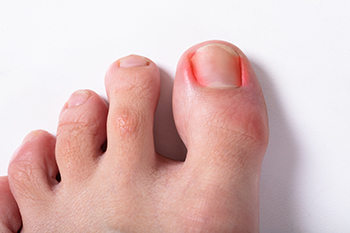
Ingrown toenails develop when the edge of the nail grows into the surrounding skin. This problem usually affects the big toe and can become painful while walking or wearing shoes. Common causes include trimming the nails too short, rounding the corners, and wearing tight-fitting shoes. Sweaty feet and injuries to the toes can also increase the risk. An ingrown toenail usually begins in Stage 1, which includes redness, swelling, and tenderness along the nail edge. Stage 2 develops when the skin becomes more irritated and starts to drain fluid or pus. The area can also become warm and more painful. Stage 3 is more serious and includes ongoing swelling, thickened skin, and signs of infection around the nail. A podiatrist can treat ingrown toenails with proper nail care, pressure relief, and other treatment methods that help the nail grow correctly again. If you have pain from an ingrown toenail, it is suggested that you make an appointment with a podiatrist for an exam and treatment options.
Ingrown toenails can become painful if they are not treated properly. For more information about ingrown toenails, contact One of our podiatrists of Dr. Powers Foot and Ankle. Our doctors can provide the care you need to keep you pain-free and on your feet.
Ingrown Toenails
Ingrown toenails occur when a toenail grows sideways into the bed of the nail, causing pain, swelling, and possibly infection.
Causes
Prevention
Wearing proper fitting shoes and using proper cutting techniques will also help decrease your risk of developing ingrown toenails.
Treatment
Ingrown toenails are a very treatable foot condition. In minor cases, soaking the affected area in salt or antibacterial soaps will not only help with the ingrown nail itself, but also help prevent any infections from occurring. In more severe cases, surgery is an option. In either case, speaking to your podiatrist about this condition will help you get a better understanding of specific treatment options that are right for you.
If you have any questions, please feel free to contact one of our offices located in Bloomington and Washington, IN . We offer the newest diagnostic and treatment technologies for all your foot care needs.
Read more about Ingrown Toenail Care
An ingrown toenail is a nail that has curved downward and grows into the skin. This typically occurs at the nail borders, or the sides of the nail. As a result, pain, redness, swelling, and warmth may occur in the toe. If a break in the skin forms due to the ingrown nail, bacteria may enter and cause an infection in the area; this is typically characterized by a foul odor and drainage.
Ingrown toenails have multiple reasons for developing. In many instances, the condition is a result of genetics and is inherited. The most common cause, however, is improper trimming; cutting the toenails too short forces the skin beside the nail to fold over. An ingrown toenail can also develop due to trauma, such as stubbing the toe, having an object fall on the toe, or participating in activities that involve repeated kicking or running. Wearing shoes that are too tight or too short can also cause ingrown toenails.
Treatment for an ingrown toenail varies between patients and the severity of the condition. Milder cases that don’t involve infection or other medical conditions can benefit from soaking the feet in room-temperature water and gently massaging the side of the nail. In most cases, however, it is best to see your podiatrist for thorough and proper treatment. After examining your toe, your podiatrist may prescribe oral antibiotics to clear the infection if one is present. Surgical removal of either a portion of the nail or the entire nail may also be considered. In some cases, complete removal or destruction of the nail root may be required. Most patients who undergo nail surgery experience minimal pain afterward and can return to normal activity the following day.
Ingrown toenails can be prevented with proper nail trimming and by avoiding improper-fitting shoes. When cutting the toenails, be sure that you are cutting in a straight line and avoid cutting them too short. Shoes should not be too short or tight in the toe box.

Diabetic patients often have decreased sensitivity in their feet, which makes a visual inspection of the feet even more important. If you’re diabetic, having periodic screenings is extremely important for maintaining the overall health of your feet.

Gout is a type of inflammatory arthritis caused by a buildup of uric acid in the body, which forms crystals in the joints. Diet plays a role, as foods such as red meat, sugary drinks, and alcohol can increase uric acid levels. Risk factors include genetics, being overweight, and certain medications. Symptoms include sudden intense pain, swelling, redness, and tenderness. The big toe is commonly affected because it experiences pressure and tends to be cooler, allowing crystals to form more easily. Flare-ups can limit movement and disrupt daily life. A podiatrist can help manage symptoms, provide treatment, and offer guidance on prevention. If you have symptoms of gout, it is suggested that you are under the care of a podiatrist who can help you to manage this painful condition.
Gout is a painful condition that can be treated. If you are seeking treatment, contact One of our podiatrists from Dr. Powers Foot and Ankle. Our doctors will treat your foot and ankle needs.
What Is Gout?
Gout is a form of arthritis that is characterized by sudden, severe attacks of pain, redness, and tenderness in the joints. The condition usually affects the joint at the base of the big toe. A gout attack can occur at any random time, such as the middle of the night while you are asleep.
Symptoms
Risk Factors
Prior to visiting your podiatrist to receive treatment for gout, there are a few things you should do beforehand. If you have gout you should write down your symptoms–including when they started and how often you experience them, important medical information you may have, and any questions you may have. Writing down these three things will help your podiatrist in assessing your specific situation so that he or she may provide the best route of treatment for you.
If you have any questions, please feel free to contact one of our offices located in Bloomington and Washington, IN . We offer the newest diagnostic and treatment technologies for all your foot care needs.
Gout is a form of arthritis that is caused by a buildup of uric acid crystals in the joints. This considered to be one of the most frequently recorded medical illnesses throughout history. Gout occurrences in the US have risen within the past twenty years and the condition now affects 8.3 million people which is 4% of all Americans. Researchers have found that gout affects men more than women and African-American men more than white men.
Symptoms of gout are warmth, swelling, discoloration, and tenderness in the affected joint area. The small joint on the big toe is the most common place for a gout attack to occur.
People who are obese, gain weight excessively, drink alcohol heavily, have high blood pressure, or have abnormal kidney function are more likely to develop gout. Furthermore, certain drugs and diseases are likely to increase levels of uric acid in the joints which eventually leads to gout. You are also more likely to develop gout if you eat a lot of meat and fish.
Many who experience gout attacks will experience repeated attacks over the years. Some people who have gout symptoms, may never have them again, but others may experience them several times a year. If you have gout symptoms throughout the year, you may have recurrent gout. Those who have gout should also be careful about their urate crystals collecting in their urinary tract, because this may lead to kidney stones.
Diagnosis for gout is done by checking the level of uric acid in the joints and blood. Your podiatrist may also prescribe medicine to reduce uric acid buildup in the blood, which will help prevent any gout attacks.
To treat gout, your podiatrist may also prescribe you Anti-inflammatory medication (NSAIDs) which will relieve the pain and swelling of a gout episode and it can also shorten a gout attack. Maintaining a healthy diet is also a proven method to prevent gout attacks.

Pickleball is a fast-growing sport that combines quick movements with sudden stops and turns. These actions place stress on the feet and ankles, especially when running, lunging, or shifting direction. Two common problems linked to pickleball are ankle sprains, which happen when the foot twists, and Achilles tendon injuries, which affect the strong band that connects the calf muscle to the heel. Some people may also develop tendon irritation, known as tendinitis, or muscle strains in the lower leg. Risk factors include age, previous injuries, and reduced flexibility or strength. Symptoms include pain, swelling, stiffness, or difficulty walking after play. A podiatrist can examine the foot and ankle, use imaging if needed, and create a treatment plan. Care may include bracing, custom orthotics, or guidance to improve movement and reduce stress on the joints. If you have foot or ankle problems after playing pickleball, it is suggested that you schedule an appointment with a podiatrist for a diagnosis and appropriate treatment.
Ankle and foot injuries are common among athletes and in many sports. They can be caused by several problems and may be potentially serious. If you are feeling pain or think you were injured in a sporting event or when exercising, consult with One of our podiatrists from Dr. Powers Foot and Ankle. Our doctors will assess your condition and provide you with quality foot and ankle treatment.
Common Injuries
The most common injuries that occur in sporting activities include:
Symptoms
Symptoms vary depending upon the injury and in some cases, there may be no symptoms at all. However, in most cases, some form of symptom is experienced. Pain, aching, burning, bruising, tenderness, tightness or stiffness, sensation loss, difficulty moving, and swelling are the most common symptoms.
Treatment
Just as symptoms vary depending upon the injury, so do treatment options. A common treatment method is known as the RICE method. This method involves rest, applying ice, compression and elevating the afflicted foot or ankle. If the injury appears to be more serious, surgery might be required, such as arthroscopic or reconstructive surgery. Lastly, rehabilitation or therapy might be needed to gain full functionality in the afflicted area. Any discomfort experienced by an athlete must be evaluated by a licensed, reputable medical professional.
If you have any questions please contact one of our offices located in Bloomington and Washington, IN . We offer the newest diagnostic and treatment technologies for all your foot and ankle needs.


