

Custom orthotics, or shoe inserts, should be periodically replaced. Orthotics must fit properly to give you the best results. Protect your feet and ankles!
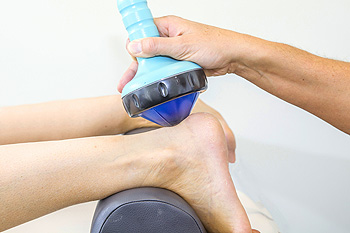
A small percentage of people who have plantar fasciitis experience little or no positive response to ordinary treatment. An option to consider may be to have Extracorporeal Shock Wave Therapy (ESWT) performed. This can be a successful treatment for this type of foot condition. Shockwave therapy is administered by targeting shock waves into the damaged tissue surrounding the plantar fascia. This procedure generally takes about 20 minutes and anesthesia is typically not needed if the treatment is low impact. Conversely, with high-intensity treatment, general anesthesia may be needed as a result of the pain that may be felt. Patients have experienced little or no downtime after the session, however, several treatments may be needed for permanent relief. Possible side effects may include swelling, redness, and slight bruising at the treatment site. If you suffer from heel pain, please consult with a podiatrist who can determine if shockwave therapy is right for you.
Shockwave therapy is a treatment commonly used to treat various injuries and conditions, particularly plantar fasciitis in the feet. To learn more, consult with One of our podiatrists from Dr. Powers Foot and Ankle. Our doctors can provide the care you need to keep you pain-free and on your feet.
Shockwave Therapy
Shockwave therapy is a new treatment option designed to treat bone conditions such as tennis elbow, shoulder pain, and others. Shockwave therapy uses high intensity sound waves that are directed to the affected tissues of the body with pinpoint accuracy. The effects are very beneficial, leading to a production of collagen fibers, eliminating inflammation.
Who Benefits from Shockwave?
Shockwave is recommended for patients suffering from heel pain and associated problems. Heel pain is a common condition which can be caused by obesity, overexertion, and spending a substantial amount of time on hard floors with your feet exposed and unsupported.
Fast and Easy
The therapy is actually a simple process that can leave patients feeling better the very next day. Shockwave therapy is not as dramatic as it sounds. It enables more blood flow to effected areas, addressing the source of the problem and allowing treatment to last for a long time.
Treatment & Recovery Time
Shockwave treatment will enable your feet to recover quickly. This is especially important since surgery is not required. It is cost effective and does not require the use of anesthesia. This treatment is a better option to surgery, since it is proven safe.
If you have any questions, please feel free to contact one of our offices located in Bloomington and Washington, IN . We offer the newest diagnostic and treatment technologies for all your foot care needs.
Read more about Treating Heel Pain with Shockwave Therapy
Shockwave therapy is one treatment option for plantar fasciitis, a condition that causes heel and foot inflammation and pain. This type of injury is often caused by overworking the feet. Heel pain is most common in people that exercise often, individuals who are overweight, and people whose profession require them to stand for long periods of time.
Heel pain can be caused by a number of problems including ill-fitting shoes, strenuous exercise routines or work hazards. Simple treatment options involve buying new shoes, taking ibuprofen, doing heel and foot exercises, and resting your feet. For severe cases, shockwave therapy can be considered a more viable form of treatment.
Shockwave therapy should be considered for patients that have had unsuccessful treatment or whose heel pain has lasted for more than six months. In shockwave therapy, a device delivers shockwaves to the patient’s body, which jumpstart the body’s repair mechanisms. These mechanisms then begin working more effectively to repair damage done to the heel area.
Shockwave therapy also helps eliminate pain in the heel area. When the body’s natural repair mechanisms are triggered, tissue healing in the body is sped up. This leads to pain reduction after pain transmission nerves are stimulated.
Shockwave therapy eliminates the risk factors associated with surgery, such as the use of anesthetics, and is less invasive. Since this technique also helps improve the body’s natural healing techniques, recovery time should be shorter than surgical procedures.
Discomfort issues can also be a side effect of treatment. Short-term issues normally include skin bruising, minor pain during and after treatment, swelling of the heel, and discolored tissue. However, these side effects of shockwave therapy usually disappear after a few days. The fast recovery time of shockwave therapy makes it easy for patients to return to their daily routines.
Like most types of treatments, surgeries, and medications, shockwave therapy is not for everyone. Potential patients with heart conditions and people with pacemakers should not be considered for this technique. People on certain types of medications, usually medications affecting blood clotting, would be ineligible for shockwave therapy. Children and pregnant women should avoid this treatment option as well.
Overall, shockwave therapy could be a great option for heel pain. It is less invasive than surgery, helps trigger natural healing mechanisms, and should be considered by people who have had long bouts of heel pain or tried conventional treatment options that were unsuccessful.

As children gleefully skip and run, their feet become the unsung heroes of their adventures. A child’s foot is not fully developed at birth, and will gradually mature as the growing process occurs. Flat feet, often seen in toddlers, emerge as a result of developing arches. The right shoes for tiny feet are paramount, supporting their natural formation. Interestingly, children have more sweat glands per square inch on their feet as compared to adults, making it understandable to crawl or walk without socks. When children’s feet are observed, their evolving balance and coordination skills can be noticed. So, next time you witness a hop, a skip, or a jump, remember, those feet are crafting a tale of growth, exploration, and endless childhood delight. If you would like additional knowledge about children’s feet, it is suggested that you confer with a podiatrist.
The health of a child’s feet is vital to their overall well-being. If you have any questions regarding foot health, contact One of our podiatrists of Dr. Powers Foot and Ankle. Our doctors can provide the care you need to keep you pain-free and on your feet.
Tips for Keeping Children’s Feet Healthy
If you have any questions, please feel free to contact one of our offices located in Bloomington and Washington, IN . We offer the newest diagnostic and treatment technologies for all your foot care needs.
Read more about How to Care for Your Child’s Feet
It is never normal for a child to experience pain in his or her feet. Foot pain that lasts more than a few days and limits a child’s ability to walk should be examined by a podiatrist. Many adult foot ailments originate in childhood and may be present at birth. Common foot issues that are experienced by children are pediatric flat foot, Sever’s disease, ingrown toenails, and plantar warts.
A child’s foot grows rapidly during the first year, allowing it to reach almost half of their adult foot size. Consequently, foot specialists consider the first year to be the most crucial point in the foot development process. There are ways you can help ensure that your child’s foot develops properly. One way is to carefully look at your baby’s feet. If you notice any deformities, you should immediately seek professional care. You should also loosely cover your child’s foot, since tight coverings may prevent movement and inhibit normal development. Another tip is to change the baby’s positioning throughout the day. If your baby lies down in one spot for too long, it may put an excess amount of strain on the feet and legs.
It is best that you try not to force a child to start walking. Children will begin to walk when they are both physically and emotionally capable to do so. You should also avoid comparing your child’s walking progress with other children because the age range for independent walking may range. When your child’s feet begin to develop, you may need to change both their shoe and sock size every few months to allow room for their feet to grow.
Kids are sometimes prone to splinters, cuts, and severe injuries because they tend to walk around barefoot. This also makes them more susceptible to developing plantar warts which is a condition caused by a virus that invades the sole of the foot through breaks in the skin. These ailments can be avoided by making sure your child wears shoes in unsanitary environments. You should also wash any minor cuts or scrapes on your child’s feet. It is a myth that exposure to fresh air will heal injuries; fresh air will only expose your child’s cuts to germs.
As a parent, you should ensure that your child’s feet are developing properly and are being properly maintained. Consequently, it is important that you perform routine inspections on his or her feet to detect any injuries or deformities in their early stages. Early detection and treatment will help to ensure that your child does not develop any serious foot conditions.
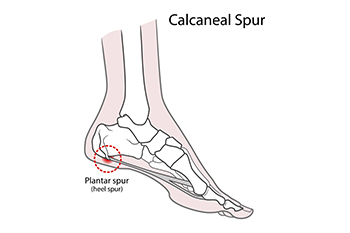
Heel spurs are common, yet often misunderstood, foot conditions that can cause significant discomfort and hinder daily activities. These bony growths develop on the underside of the heel bone and are often associated with plantar fasciitis. The most prevalent symptom of a heel spur is a sharp, stabbing pain in the heel, particularly when taking the first steps after periods of rest. Additionally, prolonged standing or walking can exacerbate the pain. A known cause of heel spurs is the repetitive strain on the plantar fascia, the thick band of tissue connecting the heel bone to the toes. Over time, this strain can lead to inflammation causing the formation of a heel spur. Contributing factors may include wearing improper footwear, obesity, excessive physical activity, or an abnormal foot structure. Early detection and proper treatment are essential for managing the symptoms and preventing further complications associated with heel spurs. If you have heel pain, it is suggested that you consult a podiatrist sooner rather than later for proper treatment techniques.
Heel spurs can be incredibly painful and sometimes may make you unable to participate in physical activities. To get medical care for your heel spurs, contact One of our podiatrists from Dr. Powers Foot and Ankle. Our doctors will do everything possible to treat your condition.
Heels Spurs
Heel spurs are formed by calcium deposits on the back of the foot where the heel is. This can also be caused by small fragments of bone breaking off one section of the foot, attaching onto the back of the foot. Heel spurs can also be bone growth on the back of the foot and may grow in the direction of the arch of the foot.
Older individuals usually suffer from heel spurs and pain sometimes intensifies with age. One of the main condition’s spurs are related to is plantar fasciitis.
Pain
The pain associated with spurs is often because of weight placed on the feet. When someone is walking, their entire weight is concentrated on the feet. Bone spurs then have the tendency to affect other bones and tissues around the foot. As the pain continues, the feet will become tender and sensitive over time.
Treatments
There are many ways to treat heel spurs. If one is suffering from heel spurs in conjunction with pain, there are several methods for healing. Medication, surgery, and herbal care are some options.
If you have any questions, please feel free to contact one of our offices located in Bloomington and Washington, IN . We offer the newest diagnostic and treatment technologies for all your foot care needs.
Heel spurs are the result of calcium deposits that cause bony protrusions on the underside of the heel. Heel spurs are usually painless, but they have the potential to cause heel pain. Heel spurs tend to be associated with plantar fasciitis, which is a condition that causes inflammation of the band of connective tissue that runs along the bottom of the foot. They most often occur to athletes whose sports involve a lot of running and jumping.
Some risk factors for developing heel spurs include running and jogging on hard surfaces, being obese, wearing poorly fitting shoes, or having walking gait abnormalities.
It is possible to have a heel spur without showing signs of any symptoms. However, if inflammation develops at the point of the spur’s formation, you may have pain while walking or running. In terms of diagnosis, sometimes all a doctor needs to know is that the patient is experiencing a sharp pain localized to the heel to diagnose a heel spur. Other times, an x-ray may be needed to confirm the presence of a heel spur.
Heel spurs can be prevented by wearing well-fitting shoes that have shock-absorbent soles. You should also be sure that you are choosing the right shoe for the activity you want to partake in; for example, do not wear walking shoes when you want to go on a run. Additionally, maintaining a healthy weight can be beneficial toward preventing heel spurs, as it will prevent an excess amount of pressure being placed on the ligaments.
There are a variety of treatment options for people with heel spurs. Some of these include stretching exercises, physical therapy, shoe inserts, or taping and strapping to rest stressed muscles and tendons. If you have heel pain that lasts longer than a month, don’t hesitate to seek help from a podiatrist. Your doctor can help you determine which treatment option is best for you.
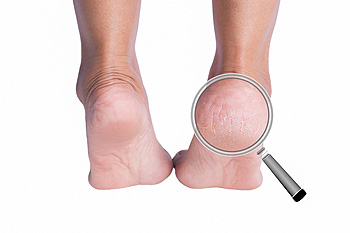
The foot condition that is known as cracked heels affects approximately 20 percent of adults throughout the country. Severely cracked heels are referred to as fissures, and may bleed and become infected. Cracked heels can happen from frequently wearing shoes that have an open back, or from standing on hard surfaces for most of the day. Having the correct knowledge of why this condition develops can be followed by implementing prevention strategies. These can include washing and drying the feet thoroughly, followed by applying a good moisturizer on them. It is helpful to avoid flip-flops when possible, and instead, it is beneficial to choose a shoe that has a cushioned heel. There may be existing medical conditions that may cause cracked heels to develop. These can include thyroid disorders, poor circulation, and elevated glucose levels. If you have cracked heels, it is suggested that you speak with a podiatrist who can offer you correct relief and treatment methods.
Cracked heels are unsightly and can cause further damage to your shoes and feet. If you have any concerns, contact One of our podiatrists from Dr. Powers Foot and Ankle. Our doctors can provide the care you need to keep you pain-free and on your feet.
Cracked Heels
Cracked heels appear unappealing and can make it harder for you walk around in sandals. Aside from looking unpleasant, cracked heels can also tear stockings, socks, and wear out your shoes. There are several methods to help restore a cracked heel and prevent further damage.
How Do You Get Them?
Dry skin is the number one culprit in creating cracked heels. Many athletes, walkers, joggers, and even swimmers suffer from cracked heels. Age and skin oil production play a role to getting cracked heels as well.
Promote Healing
Over the counter medicines can help, especially for those that need instant relief or who suffer from chronic dry feet.
Wear Socks – Wearing socks with medicated creams helps lock in moisture.
Moisturizers – Applying both day and night will help alleviate dryness which causes cracking.
Pumice Stones – These exfoliate and remove dead skin, which allows for smoother moisturizer application and better absorption into the skin.
Change in Diet
Eating healthy with a well-balanced diet will give the skin a fresh and radiant look. Your body responds to the kinds of food you ingest. Omega-3 fatty acids and zinc supplements can also revitalize skin tissue.
Most importantly, seek professional help if unsure how to proceed in treating cracked heels. A podiatrist will help you with any questions or information needed.
If you have any questions, please feel free to contact one of our offices located in Bloomington and Washington, IN . We offer the newest diagnostic and treatment technologies for all your foot care needs.
Read more about Solutions for Cracked Heels
Cracked heels can make life very frustrating and embarrassing when displaying the bare feet. Aside from being unpleasing to the eye, they can also tear stockings and socks and wear out shoes at a faster rate. When severe, cracked heels may cause pain or infection.
Cracked heels are a problem for those who are athletic, those who may walk a lot, and those who have especially dry skin. Those who use medication that dry the skin, those who swim often, wearing certain types of shoes, and those who are diabetic may have trouble with cracked heels. Seniors whose skin produces less oil may also have trouble with cracked feet. There is no one way to develop cracked feet, and there is no cure.
Today, the market consists of numerous products that have a variety of ingredients to promote healing. Some of these are over-the-counter. Others are prescribed by a doctor, especially for those who have chronic dry feet and heels.
Some doctors recommend wearing socks at night for those with rough skin. This helps further healing, and helps creams stay on longer and better absorb into the skin.
One way to alleviate dryness that causes cracked heels is by using moisturizers both day and night. Another way is to make sure the skin is clean and dry at all times. Using a pumice stone to buff away dead skin before putting on moisturizer can also help. Cracked heels will not respond to the cream unless the outer layer of skin is first removed through exfoliation. After exfoliation, lotion or ointment will be absorbed by the skin more easily.
Foods that produce healing and balance can also help the skin from within. Everything that is put into the body can either help it or hurt it. Taking supplements of omega-3 fatty acids and zinc can also be very beneficial.
Nevertheless, not all products are guaranteed to help treat cracked feet. Seeing a professional is best if other treatments options were unsuccessful. A podiatrist should be able to give the best advice to help with this problem.

Suffering from this type of pain? You may have the foot condition known as Morton’s neuroma. Morton’s neuroma may develop as a result of ill-fitting footwear and existing foot deformities. We can help.


