
Gout is a form of arthritis that is caused by a buildup of uric acid crystals in the joints. This considered to be one of the most frequently recorded medical illnesses throughout history. Gout occurrences in the US have risen within the past twenty years and the condition now affects 8.3 million people which is 4% of all Americans. Researchers have found that gout affects men more than women and African-American men more than white men.
Symptoms of gout are warmth, swelling, discoloration, and tenderness in the affected joint area. The small joint on the big toe is the most common place for a gout attack to occur.
People who are obese, gain weight excessively, drink alcohol heavily, have high blood pressure, or have abnormal kidney function are more likely to develop gout. Furthermore, certain drugs and diseases are likely to increase levels of uric acid in the joints which eventually leads to gout. You are also more likely to develop gout if you eat a lot of meat and fish.
Many who experience gout attacks will experience repeated attacks over the years. Some people who have gout symptoms, may never have them again, but others may experience them several times a year. If you have gout symptoms throughout the year, you may have recurrent gout. Those who have gout should also be careful about their urate crystals collecting in their urinary tract, because this may lead to kidney stones.
Diagnosis for gout is done by checking the level of uric acid in the joints and blood. Your podiatrist may also prescribe medicine to reduce uric acid buildup in the blood, which will help prevent any gout attacks.
To treat gout, your podiatrist may also prescribe you Anti-inflammatory medication (NSAIDs) which will relieve the pain and swelling of a gout episode and it can also shorten a gout attack. Maintaining a healthy diet is also a proven method to prevent gout attacks.
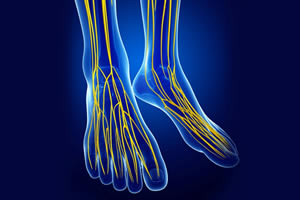 The majority of foot and ankle surgeries require making an incision in the skin. After undergoing a foot or ankle surgery, one of the most common post-surgical complications is a cutaneous nerve injury. Cutaneous nerves are responsible for sensation in the skin. When one or more of these nerves are damaged during a foot or ankle surgery, the patient may experience pain, numbness, or tingling in the area supplied by the injured nerve. The cutaneous nerves may become damaged when the surgeon makes an incision, or if the nerve is bruised or pinched during surgery. Sometimes patients can develop neuromas, a thickening of the tissue that surrounds a damaged nerve. This can cause pain, burning, tingling, and other strange sensations, or it may result in a partial or total loss of sensation. Impaired sensation is a particularly concerning complication, as it can increase the chances of developing foot wounds and ulcers that go undetected and become infected.
If you sustain a cutaneous nerve injury during a procedure, the damaged nerve will often heal gradually over time, healing fully within six to nine months. Post-surgical cutaneous nerve injuries are typically treated conservatively, using medications, rest, orthotics, and physical therapy. In very rare cases, additional surgery to repair a damaged nerve may be necessary. Prior to any foot and ankle surgery, don’t hesitate to ask your podiatrist about the benefits, risks, and possible complications relating to your specific operation. To learn more, please consult with a podiatrist.
If you have any questions, please feel free to contact one of our offices located in Bloomington, Bedford, and Washington, IN. We offer the newest diagnostic and treatment technologies for all your foot care needs.
 A pinched nerve occurs when too much pressure is placed on a specific nerve by surrounding tissues. This can happen just about anywhere in the body, including the feet. The symptoms of a pinched nerve include sharp, aching, or burning pain, and numbness, tingling, or muscle weakness in the affected foot. A pinched nerve in the foot may be the result of an injury. Participating in sports or physical activities that repeatedly put excess pressure on the tissues in your feet can cause them to become inflamed and swollen, which can put pressure on and “pinch” nearby nerves.
Pinched nerves can also be caused by underlying medical conditions. Bone spurs, hard lumps of extra bone that can grow on the edges of foot and toe bones, can put pressure on a nerve. Ganglion cysts, fluid-filled benign growths that can form around a joint, can also pinch a nerve. Other medical conditions that can cause a pinched nerve include arthritis, tarsal tunnel syndrome, or a neuroma, non-cancerous growths of nerve tissue that often occurs between the third and fourth toes.
Wearing tight, narrow, or otherwise ill-fitting shoes can increase the risk of pinching a nerve in the foot. Certain structural issues in the feet, such as having flat feet or high arches, can make a pinched nerve more likely to occur as well. This is because they can place excess pressure on the tissues in the foot, leading to nerve compression.
Fortunately, pinched nerves often heal with at-home treatments, such as resting and icing the affected foot, massaging the foot, taking over-the-counter pain medications, and wearing wider, more comfortable shoes. If you have symptoms of a pinched nerve in your foot that do not improve over time, or symptoms that worsen, it is suggested that you seek the care of a podiatrist. This specialist can diagnose the problem through physical examination, electromyography, and imaging or nerve conduction tests, and then prescribe the appropriate treatments. These may include prescription medications or corticosteroid injections to relieve pain, wearing custom orthotic inserts, or physical therapy. In rare cases that don’t respond to more conservative treatment methods, surgery may also be an option. For more information, please contact a podiatrist near you.
If you have any questions, please feel free to contact one of our offices located in Bloomington, Bedford, and Washington, IN. We offer the newest diagnostic and treatment technologies for all your foot care needs.

When a digital nerve leading to the toes becomes repetitively irritated, thickened scar tissue can form around it—entrapping the nerve and causing pain or numbness in the ball of the foot, or the feeling that you are walking on a marble or pebble. This condition is known as Morton’s neuroma—a condition named after a 19th-century American surgeon, Thomas George Morton. Morton’s neuroma most commonly occurs between the third and fourth toes, although it can also affect the nerve running between the second and third toes. Morton’s neuroma can often be caused by wearing shoes that are narrow or tight in the toe box and squeeze the toes together. A podiatrist may treat Morton’s neuroma with a variety of methods to offload pressure on the irritated nerve, along with icing and resting, custom orthotics and shoe modifications, and anti-inflammatory medications. In some cases, surgery may be necessary to relieve pain and help the nerve to heal.
Morton’s neuroma is a very uncomfortable condition to live with. If you think you have Morton’s neuroma, contact One of our podiatrists of Dr. Powers Foot and Ankle. Our doctors will attend to all of your foot care needs and answer any of your related questions.
Morton’s Neuroma
Morton’s neuroma is a painful foot condition that commonly affects the areas between the second and third or third and fourth toe, although other areas of the foot are also susceptible. Morton’s neuroma is caused by an inflamed nerve in the foot that is being squeezed and aggravated by surrounding bones.
What Increases the Chances of Having Morton’s Neuroma?
Morton’s neuroma is a very treatable condition. Orthotics and shoe inserts can often be used to alleviate the pain on the forefront of the feet. In more severe cases, corticosteroids can also be prescribed. In order to figure out the best treatment for your neuroma, it’s recommended to seek the care of a podiatrist who can diagnose your condition and provide different treatment options.
If you have any questions, please feel free to contact one of our offices located in Bloomington and Washington, IN . We offer the newest diagnostic and treatment technologies for all your foot care needs.
Read more about What is Morton’s Neuroma?
Morton’s neuroma, (also referred to as Morton’s metatarsalgia, Morton’s neuralgia, plantar neuroma or intermetatarsal neuroma) is a condition that is caused when the tissue around one of the nerves between your toes begins to thicken. This thickening can result in pain in the ball of the foot. Fortunately, the condition itself is not cancerous.
Morton’s neuroma affects women more often than men with a ratio of 4:1. It tends to target women between the age of 50 and 60, but it can occur in people of all ages. There are some risk factors that may put you at a slightly higher risk of developing the condition. People who often wear narrow or high-heeled shoes are often found to be linked to Morton’s neuroma. Additionally, activities such as running or jogging can put an enormous amount of pressure on the ligament and cause the nerve to thicken.
There usually aren’t any outward symptoms of this condition. A person who has Morton’s neuroma may feel as if they are standing on a pebble in their shoe. They may also feel a tingling or numbness in the toes as well as a burning pain in the ball of their foot that may radiate to their toes.
In order to properly diagnose you, the doctor will press on your foot to feel for a mass or tender spot. He may also do a series of tests such as x-rays, an ultrasound, or an MRI. X-rays are usually done to rule out any other causes for your foot pain such as a stress fracture. Ultrasounds are used to reveal soft tissue abnormalities that may exist, such as neuromas. Your podiatrist may want to use an MRI in order to visualize your soft tissues.
There are three main options for treatment of Morton’s neuroma: Injections, decompression surgery, and removal of the nerve. Injections of steroids into the painful area have been proven to help those with Morton’s neuroma. Decompression surgery has been shown to relieve pressure on the affected nerve by cutting nearby structures such as the ligaments in the foot. Another treatment option would be to surgically remove the growth to provide pain relief.
If you suspect that you have Morton’s neuroma you should make an appointment with your podiatrist right away. You shouldn’t ignore any foot pain that lasts longer than a few days, especially if the pain does not improve.

You don’t need an excuse to have beautiful nails. Step outside without worrying about the appearance of your feet.
Symptoms of nerve damage in the feet can manifest in various ways. One common condition caused by nerve damage is foot drop. People with foot drop have difficulty lifting and holding up the front part of their foot. This leads to the foot dragging on the floor as the person walks. To avoid this, many patients develop an altered gait to compensate. They may lift their knees too high while walking and then slap their foot down onto the ground with each step. This is known as a steppage gait. Other symptoms of foot drop include numbness, tingling, and muscle weakness in the affected foot.
Foot drop can occur as a symptom of several underlying conditions. The most common cause is peripheral neuropathy, a type of nerve damage that affects the limbs. It is often associated with diabetes. Charcot-Marie-Tooth disease, a genetic condition that causes abnormalities in the sensory and motor nerves, frequently results in foot drop. Other potential causes include muscular dystrophy, peroneal nerve damage, polio, multiple sclerosis, amyotrophic lateral sclerosis (ALS), or stroke.
With proper treatment, many people who have foot drop are able to make a full recovery. Treatment options vary depending on the underlying cause of the condition. They may include wearing braces, splints, shoes inserts, or other orthotics to support the foot and keep it in the proper position, physical therapy to strengthen the muscles and restore the ability to walk, and nerve stimulation to retrain the nerves and muscles of the affected foot. In more severe cases, surgery may be needed to repair or relieve pressure on a nerve. Sometimes procedures on the bones and tendons of the foot may also be necessary.
If you have symptoms of foot drop, it is strongly suggested that you seek the care of a podiatrist.
 Foot drop refers to the difficulty in lifting the front part of the foot, sometimes causing it to drag on the ground as you walk. Foot drop is not a condition in and of itself, it can be caused by a problem with your muscles or nerves, or your foot or leg anatomy. It can also be caused due to an underlying health condition, such as a peroneal nerve injury, peripheral neuropathy, muscular dystrophy, polio, stroke, multiple sclerosis, or ALS. People with foot drop may overcompensate for their inability to raise the front part of the foot by lifting the entire leg higher than normal to take a step, which is known as “steppage gait.” The foot may also audibly slap as it hits the ground when walking. If you have difficulty lifting the front of your foot, it is suggested that you seek the care of a podiatrist.
Foot drop is a condition in which a person has difficulty lifting the front part of their foot. Rather than being a diagnosis in and of itself, foot drop is a symptom of other underlying issues with the muscles, nerves, or anatomy of your foot or leg. If you have symptoms of foot drop, please consult our podiatrist from Dr. Powers Foot and Ankle. Our doctor will assess your condition and provide you with quality foot and ankle treatment.
Symptoms
Causes
Diagnosis
Your podiatrist may conduct various diagnostic tests, including
Treatment
Your treatment will depend on the underlying cause of the foot drop. Treatment options may include:
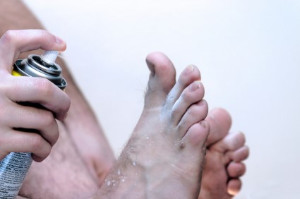 If you notice a rash on the skin of your feet, mainly between the toes, that is red, itchy, scaly or dry, it may be a sign of a fungal infection known as athlete’s foot. Athlete’s foot can cause other symptoms such as a foul odor, cracked and peeling skin, and a burning sensation. The fungi that cause athlete’s foot often thrive in warm and moist environments which means that it often spreads in areas such as communal showers or public pools. Other ways athlete’s foot can spread include sharing items that touch the feet, as well as touching the infected area directly. Patients who believe that they may have athlete’s foot should consult with a podiatrist for treatment in order to clear the infection and prevent it from spreading.
Athlete’s Foot
Athlete’s foot is often an uncomfortable condition to experience. Thankfully, podiatrists specialize in treating athlete’s foot and offer the best treatment options. If you have any questions about athlete’s foot, consult with One of our podiatrists from Dr. Powers Foot and Ankle. Our doctors will assess your condition and provide you with quality treatment.
What Is Athlete’s Foot?
Tinea pedis, more commonly known as athlete’s foot, is a non-serious and common fungal infection of the foot. Athlete’s foot is contagious and can be contracted by touching someone who has it or infected surfaces. The most common places contaminated by it are public showers, locker rooms, and swimming pools. Once contracted, it grows on feet that are left inside moist, dark, and warm shoes and socks.
Prevention
The most effective ways to prevent athlete’s foot include:
Symptoms
Athlete’s foot initially occurs as a rash between the toes. However, if left undiagnosed, it can spread to the sides and bottom of the feet, toenails, and if touched by hand, the hands themselves. Symptoms include:
Diagnosis and Treatment
Diagnosis is quick and easy. Skin samples will be taken and either viewed under a microscope or sent to a lab for testing. Sometimes, a podiatrist can diagnose it based on simply looking at it. Once confirmed, treatment options include oral and topical antifungal medications.
If you have any questions, please feel free to contact one of our offices located in Bloomington and Washington, IN . We offer the newest diagnostic and treatment technologies for all your foot care needs.
Read more about Athlete’s Foot
Athlete’s foot, or tinea pedis, is a skin disease caused by a fungal infection. The infection typically occurs between the toes, and the feet are most subject to this disease because shoes best create the warm, dark, and moist environment in which fungus thrives. Other areas that create a similar environment, such as swimming pools, public showers, and locker rooms; can also promote fungi growth.
Symptoms of athlete’s foot include dry skin, itching, scaling, inflammation, and blistering. Sometimes, blisters can evolve into the cracks or breaks in the skin. The exposed tissue can then create pain, swelling, and discharge. The spread of infection can cause itching and burning as well.
While athlete’s foot commonly occurs between the toes, it may also spread to the toenails or soles of the feet. Other parts of the body, such as the groin or underarms, can also become infected if they are touched after the original area of infection is scratched. Aside from physical contact, athlete’s foot can also spread through the contamination of footwear, clothing or bedsheets.
Proper foot hygiene is essential in preventing athlete’s foot. You can prevent the fungus from spreading by frequently washing your feet using soap and water, thoroughly drying the feet between the toes, changing shoes and socks every day to reduce moisture, and ensuring that bathroom and shower floors are disinfected. Other tips include using shower shoes, avoiding walking barefoot in public environments, wearing light and airy shoes, and wearing socks that keep the feet dry.
While treatment for athlete’s foot can involve topical or oral antifungal drugs, mild cases of the infection can be treated by dusting foot powder in shoes and socks. Any treatment used can be supplemented by frequently bathing the feet and drying the toes. If proper foot hygiene and self-care do not ease your case of athlete’s foot, contact your podiatrist. He will determine if the underlying cause of your condition is truly a fungus. If that is the case, a comprehensive treatment plan may be suggested with the inclusion of prescription antifungal medications.


