
With 2017 still fresh, many people haven’t abandoned their New Year resolutions quite yet. Given the fact that a majority of New Year’s resolutions are centered on practices for better health—like exercising more frequently and eating better—we hope you are able to stick with any you’ve made for the whole year. Of course, if you didn’t make resolutions for January 1, you can still decide to make lifestyle changes to positively affect your health and wellbeing.
One of the more popular health-related resolutions is to start a running program. This can be a great idea. Running is a fantastic exercise that improves cardiovascular conditioning, burns calories, and relieves stress. With that being said, there’s also a certain degree of injury risk, especially if you make any of the common mistakes when buying running shoes. These include:
Making these mistakes while buying running shoes can lead to potential problems for your lower limbs, but now you know what not to do. Instead, buy your shoes in the late afternoon or early evening and only use the printed size as a general guideline (not a set-in-stone rule). Always try on both shoes to ensure proper fit, especially while wearing your running socks and using your orthotics.
Our hope is that you will be able to stay safe while starting—or continuing—your running program or going back to your old running plan. The choices you make with running shoes is certainly a starting point, but make sure you take measures like easing into running and always warming up first to reduce your risk of injury. In the event you do sustain a foot or ankle injury, come in and see us. Even something that seems to be minor can become a big problem if left untreated.
For more information on keeping your lower limbs safe while running, or to request an appointment with our Bloomington, IN office, either contact us online or call (812) 333-4422 and we will be glad to help!
Diabetes has wide-ranging effects on your body. It can be a dangerous health issue, but the good news is that you aren’t powerless when it comes to this disease!
There are actions within the realm of your control that can help you manage the disease and reduce your risk of serious medical complications. Let’s take a look at some of the diabetic lifestyle changes you can make to keep the disease in check:
Better eating. As you likely know, diabetes is the result of elevated blood sugar levels. One of the keys to managing the disease is to focus your diet on healthy eating. Before we delve into what actually constitutes “healthy eating,” here’s a quick tip that can help you find success – Instead of labeling food as “good” and “bad,” think and speak about your dietary habits in the context of “I am choosing to/not to eat _____.” This is an empowering frame of reference. Also, when you affix the “good” and “bad” labels, it can lead to a downward spiral if you go off the track.
More specifically, though, you need to base your diet on veggies, lean meats, low-fat dairy products, legumes, and nuts. (Actually, if you think about it, this is just a smart dietary plan for anyone, diabetic or not!) Contrary to what we have been told, it is best to avoid whole grains and fruit as they excessively raise blood sugar levels. Avoid sugary beverages and, instead, drink lots of water and unsweetened tea. Coffee can be fine, but don’t use sugar-laden syrups. If you get coffee from places like Starbucks, ask for sugar-free options.
Exercise. It is difficult to overstate just how important exercising is for you. The physical, mental, and emotional benefits are countless, including diabetes management. The cardiovascular benefits of regular exercise are particularly important as you manage your diabetes.
Before you begin any kind of workout program, make sure you consult with your primary care physician and our office (especially if it’s been a long time since you last worked out). We can determine if there are any existing or potential issues you need to be aware of. Also, we can provide recommendations for exercises that will be best for you.
Foot care. Given all the issues diabetes can cause for your body, it can be easy to forget how the disease affects the health of your feet. This is not something you want to overlook, though!
Diabetes contributes to both nerve damage (neuropathy) and weakened blood flow (peripheral arterial disease). In turn, these can lead to dangerous situations for your feet, like diabetic ulcers and Charcot foot.
Damaged nerves can leave you unable to feel when damage—including cuts, scrapes, ingrown toenails, and calluses—has been sustained to your lower limbs. Those might be relatively minor problems for someone with normally functioning nerves and immune systems, but they can break down, become infected, and lead to gangrene. Unfortunately, the only way to treat gangrene is amputation. A proper diabetic foot care plan is centered on prevention and protection for your lower limbs, along with daily inspection to catch issues early. If you would like assistance putting yours together, we will be glad to help.
Regular appointments. If you don’t already, make sure you come in to see us roughly every two months. Regular checkups are important so we can catch issues at their earliest, most-treatable stages. We can also review your daily inspection checklist and make sure everything is going well. Of course, this also gives you the chance to ask questions to a medical professional.
For additional information on diabetic foot care, the services we offer, or to request an appointment with our Bloomington, IN podiatrist office, give us a call at (812) 333-4422.
 We treat patients for many different conditions, but one of the most concerning is nerve damage in feet. Neuropathy is a condition wherein your peripheral nerves—the ones responsible for recording information and communicating it back to the spinal column and brain (your central nervous system)—are damaged. This can become an emergency situation when an untreated minor cut or sore breaks down over time and becomes an ulcer.
Neuropathy is a concern no matter where in the body it develops, but nerve damage in the feet can be particularly alarming for a couple of reasons. First, your feet endure tremendous force loads on a daily basis, which puts them at heightened risk for injury and medical conditions. Second, feet are generally not particularly visible. Our lower limbs are often covered in socks and shoes, plus they are the furthest points on the body from our eyes. This means you have to be vigilant to catch those issues that can become medical emergencies if you have neuropathy!
Whereas neuropathy is commonly associated with diabetes—and rightfully so given that 60-70 percent of diabetic individuals will develop nerve damage during their lifetime—there are several other potential sources, including:
If you have sustained nerve damage in your feet that is causing problems like burning, tingling, or painful sensations, or you are unable to feel anything, come see us here at our Bloomington, IN office. We will determine the root cause of the problem and then create an effective treatment plan for you. If diabetes is responsible, we can help you develop a diabetic foot care plan to prevent issues from arising in the first place.
Call us at (812) 333-4422 for more information, or assistance in scheduling an appointment that works for you. You can also take advantage of our online form to contact us right now.
We may have just gotten out of National Diabetes Awareness month, but this disease needs to be given attention all year long. The number of Americans living with diabetes is staggering (29 million) and, even more concerning, it’s climbing. Effects on the body from the disease can be found, literally, from head to toe. It might be easy to think about ones like increased risk of heart attack, kidney failure, and potential blindness, but it would be a mistake to look past the link between diabetes and foot health.
Diabetes is a condition that develops on account of excessive blood sugar levels in the bloodstream. This happens when the body either doesn’t produce enough insulin—a hormone that allows the body to properly absorb and use sugar (glucose)—or it is unable to use the insulin effectively. In some cases, both of these problems exist at the same time.
The excess glucose in the blood can cause problems for most of the body’s organs and nerves. As we look at how diabetes affects foot health, skin is a central organ in the big picture.
Changes to the skin in the lower body can be an indication of a diabetic condition. These include more frequent callusing, increased itching sensations, loss of body hair, and shiny, thinning skin. Callusing is of particular concern since a callus can break down over time and become a diabetic ulcer.
Diabetic ulcers are extremely concerning. Ulceration is a breakdown of body tissue, which often results in open sores and wounds. These enable microorganisms (bacteria, fungus) to enter the body. Diabetes impairs the body’s ability to fight off infection, and a potentially serious situation can arise – gangrene. Gangrene is tissue death that cannot be treated. Instead, dead tissue needs to be removed in order to prevent it from spreading. Accordingly, this is a leading cause of lower limb amputations.
Two major conditions that play a role in diabetes and foot health are diabetic neuropathy and peripheral arterial disease (PAD). Neuropathy refers to the nerve damage that has taken place on account of the heightened glucose levels. This can leave an affected individual unable to tell when an issue exists, which then can lead to the problem worsening. PAD is a condition wherein blood vessels have become constricted and do not allow tissues to receive the oxygenated blood they need.
Diabetes can lead to severe consequences and problems for your lower limbs. If you live with this disease, come and see us as soon as possible so we can help you create a diabetic foot care plan to keep you safe. Schedule your appointment with our Bloomington, IN office by calling (812) 333-4422.
As with any field or specialty, podiatry has its own unique lexicon, and one of our goals is to help you understand and become familiar with terms like “pronation,” “gait,” and “biomechanical process.”
 Those particular terms relate to one another and have a rather strong connection. Pronation is an essential biomechanical process that takes place during your gait cycle, but let’s break this down and make it all a bit clearer for you!
To put it simply, a biomechanical process is when a living being (“bio”) moves (“mechanical”). Biomechanics are used in physical acts like jumping, swinging a baseball bat, kicking a soccer ball, throwing a football, and even simply walking. Your feet play essential roles for you, and they rely on biomechanical processes for different reasons, including absorbing the tremendous amounts of pressure and force they have to endure during the course of an average day (and even more when you perform high-impact activities).
When you walk (which is also known as your gait), your feet use an important process called pronation. As your foot pronates, it rotates inward roughly fifteen percent during the step. This takes place from the time the heel strikes as the foot comes down and then continues until the toes push off the ground. In part, this particular motion allows your foot to distribute all the physical force and stress—from walking and running—in an equitable manner.
This inward rotation not only helps the foot to absorb shock, but it also achieves optimal movement. When the foot strikes the ground, your arch flattens. You can think of this as being like a spring compressing and waiting for release. As your foot continues its roll, the arch decompresses and releases all of the built-up energy.
Now, the process is needed for distributing forces across the foot and assisting in forward movement, but there can be pronation problems. Feet that rotate either excessively (overpronation) or not enough (supination) can develop symptoms that may need to be addressed.
Overpronation results in excessive force being placed on the inner edge of the foot. Conversely, supination causes too much pressure on the outer edge. Often, overpronation is related to a flatfoot condition, whereas supination comes from high, rigid arches (cavus foot).
These issues can often be resolved with nonsurgical treatment, so come in and see us if you are experiencing pain from pronation issues! Contact our Bloomington, IN office by calling (812) 333-4422 or contact us online today.
When you see us for a foot or ankle problem, it is always our goal to resolve it for you with nonsurgical care. In some cases, we recommend surgery, but only when other options haven’t provided the results you hope to see. If we are recommending flatfoot surgery, you can rest assured knowing we have explored every other possible treatment first. You can also find comfort in the fact we are skilled and experienced in foot surgery.
In part, flatfoot surgery isn’t something to fear because it’s rarely needed. Treatment for flatfoot is actually only necessary when pain or difficulty arises due to the fallen arches. There are numerous instances wherein an individual has flat feet, but does not experience any issues. Obviously, there’s no need for treatment in these cases.
Patients with flatfoot issues can have pain and difficulty performing even routine, daily activities. We attempt to resolve these symptoms first with nonsurgical treatment options, to see if they improve the situation. These include treatments like medication, shoe inserts, custom orthotics, braces, rest, and physical therapy. The good news is that a combination of these treatment options is usually successful in providing relief.
For those rare cases when surgery is recommended, we start by completely evaluating your feet. This is used, in part, to determine if the fallen arches are stiff or flexible. We then use diagnostic imaging (typically X-rays) to create our surgical plan. The work we perform on the front end enables us to conduct a successful procedure for you.
Depending on variables that are specific to you, we may elect to either use regional or general anesthesia. No matter which we use, the intent is to ensure a painless procedure. Your comfort and safety are always a primary concern for us!
The specific surgical procedures used will depend, again, on variables specific to you and your condition. Whereas the actual procedures can vary, all flatfoot surgeries we perform have the ultimate goals of improving your walking ability and taking away your pain.
Flatfoot surgery does not entail a lengthy hospital stay. At most, you might need to stay overnight, although many patients go home the day of the procedure.
If you suffer from flatfoot pain, come see us at our Bloomington, IN office and we will create a treatment plan to provide the relief you need. Call us for more information at (812) 333-4422 or take advantage of our online form to connect with us today.
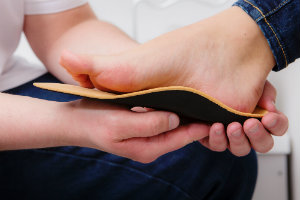
Between 2007 and 2009, our nation was mired in The Great Recession. During this time, people began to regain a sense of “value” when it comes to the things we buy and use. Thinking about value is an appropriate starting point when patients ask “Are orthotics worth the cost?”
To clear up a common economic misconception, the word “value” does not necessarily mean “cheap.” Cost is certainly a part of the picture, but you also need to look at what is received in exchange for the cost.
As an example, a pair of $200 jeans that lasts 10 years is actually a better value than having to buy a new pair of $25 jeans every year over the same time period (because the total cost is $250 in this case). Now, if those same $200 jeans only last 7 years, you are better buying the cheaper ones every year.
Beyond durability, though, you should also consider “function,” and this is important when discussing custom orthotics.
A common question we receive about orthotics is if you can just use one of the shoe inserts they sell at stores and pharmacies. Well, there are instances where you might benefit from the additional cushioning and arch support they provide, but keep in mind that mass-produced shoe inserts are not intended to correct medical problems.
When we prescribe custom orthotics, you receive valuable medical devices fully intended to address a problem you are experiencing. Further, these are customized to work with your unique foot structure and gait pattern.
Orthotic devices are also an investment in your health. The upfront cost might seem like a lot, but it is not nearly close to how much you would have to pay to address a bigger issue later. Aside from monetary concerns, custom orthotics can relieve pain and discomfort, and allow you to get back to your favorite activities, all of which are quality of life matter worth thinking about.
Hopefully you can see that if you are asking “Are orthotics worth the cost?”, the answer is a resounding “Absolutely!”
Whether we prescribe orthotic devices for you or not will depend on the condition affecting your foot or ankle. Come in and see us here at our Bloomington, IN podiatrist office so you can receive the care you need. Give us a call at (812) 333-4422 and our friendly staff will be glad to answer any questions or set you up with an appointment.
If you don’t have any issues with your feet, they simply do their job. However, understanding foot components and the roles they play—like when you spend time identifying your arch type—is useful for determining your risk factor for potential foot arch issues.
As we look at identifying foot arch issues, knowing which arch type you have is important. There are three types – moderate, low (flatfoot), and high (cavus foot). You can determine your style by examining your shoe wear patterns. Essentially, if you look at the bottoms of you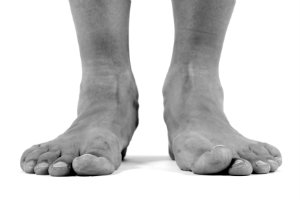 r shoes and notice even wear, your arches are likely moderate in height. Excessive wear on the inner edge is a sign of low foot arches, whereas excessive wear on the outer edge can indicate high arches.
The wet test is a matter of getting the bottom of your barefoot wet and then taking a normal step onto heavy paper or dry pavement. If your print consists of a front and back section connected by a strip about half the width of your foot, you have a moderate arch height. If the whole width is showing on the print, you have flat feet. On the other hand, a front and back connected by a thin strip, or even not connected at all, means your arch is high.
The importance of this in relation to identifying foot arch issues is that height plays a role in a biomechanical process known as pronation. Low foot arches lead to excessive roll and greater pressure on the inner edge of the foot. High arches cause supination (not enough roll) and the outer edge receives greater pressure.
Some foot arch issues are the problems caused by either being too low or too high, but sometimes the problem is what has caused the abnormal arch height in the first place. Weakened tissues in the feet—like the tendons, ligaments, and bones responsible for supporting the arch—can result in overuse injuries.
To address structural conditions and problems, we might prescribe custom orthotics. These are crafted to work specifically with your unique feet. Unlike over-the-counter shoe inserts, these prescribed devices are used in treatment for a medical issue. If you would like more information about this, or any of the services we provide at our Bloomington, IN podiatrist office, call (812) 333-4422 or use our online contact form today.
There are certainly many people who enjoy the Halloween holiday and get a kick out of those “things that go bump in the night.” Now, when you develop an abnormal bump on your foot, it can seem to be a scary situation. Knowing what is happening, though, can illuminate the situation and relieve your fears…just like using a flashlight in an otherwise dark basement!
Finding an abnormal bump on a foot might not be quite as frightening as some Halloween movies, but it is important to know what is happen and then have it addressed here at our Bloomington office. Some of the potential bumps you might develop include:
 schedule an appointment so we can provide the care you need!
No matter if you need treatment for any of these conditions, or you would like more information, we are here to help! Give us a call at (812) 333-4422 or take advantage of our online form to contact with our Bloomington, IN office today.
Also, connect with us through social media so you can stay current with the latest in health news and tips! Like us on Facebook or follow us on Twitter and you will receive the health news you need.
There are many misconceptions in society, some of which include misunderstandings as to why bunions happen. Others include:
As we noted, another popular misconception is centered on the causes of bunions. Contrary to common belief, bunions are not caused by fashionable women’s shoes. Now, don’t get us wrong, footwear featuring narrow fronts and high heels do certainly contribute to an existing issue and lead to increased pain. The cause of a bunion, though, is more likely the result of:
 our foot, a bunion could potentially develop over time.
No matter the root cause of your bunion, you should come and see us at our Bloomington, IN office if you have developed one of these common toe deformities. An untreated bunion will only worsen over time. Conservative methods can slow a bunion’s development and possibly ease symptoms, but we may recommend surgery to correct the deformity.
For more information about bunion treatment or our practice, either give us a call at (812) 333-4422 or contact us online today and we will be glad to help.


