
Choosing the right shoes for bunion pain is a lot like making sure you have the proper equipment for virtually any circumstance. You wouldn’t want to try hammering a nail with a dishrag or drying a plate with a hammer. We could spend all day coming up with other examples, but the basic fact is you need to have the right object to deal with the situation you are addressing. When it comes to reliving bunion pain, this includes making sure you are sporting certain kinds of footwear.
To start, let’s quickly rule out the wrong shoes. In this context, that means to avoid high heels, or at least limit how often you wear them. The bunion is protrusion on the inner edge of your foot, so narrow, tight shoes—like pumps or stilettos—can cause irritation and pain. Further, these particular styles place excessive pressure on the front of the foot, which can cause the condition to worsen.
It is worth noting that some people have the mistaken belief that high-heeled shoes cause bunions to develop. They can exacerbate the condition and lead to progression, but bunions typically develop as a result of inherited foot structure.
Whereas it is easy to single out high-heels as shoes to avoid, we should note that this really extends to any type of footwear that is too tight. Instead, the best shoes for relieving bunion pain are those which feature wide, deep toe boxes. The width is important for preventing friction or pressure on the bony protrusion, while depth is important for enabling the best possible range of motion for the affected joint.
It is always our preference to treat conditions with nonsurgical care whenever possible. In cases of bunions, this can include making sure you have the right shoes. Doing so will help you prevent the condition from worsening over time.
If you aren’t sure which shoes are the best ones for relieving bunion pain, we will be glad to help. Of course, you can contact us if you have any questions about this particular toe deformity or would like to schedule an appointment with our Bloomington, IN office. Bunion treatment is important because the condition is progressive, so call us at (812) 333-4422 or use our online form to connect with us right now.
It’s best to start this post by saying that we always hope all of our patients can be treated successfully with nonsurgical methods. Fortunately, we are able to use conservative care to effectively address a wide range of conditions for our patients. That being said, surgery sometimes is a necessary option, and this can be the case for bunions. Let’s take a look at this in case you are wondering “do I need bunion surgery?”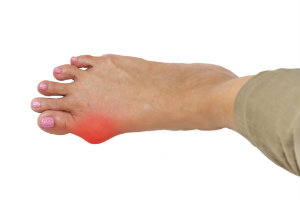
In order to determine if bunion surgery is right for you, it’s important to consider a couple of different factors. First, we want to ensure that conservative treatment methods have been adequately explored beforehand. If you are able to find sufficient relief with options like orthotics or bunion pads, then there is no need for a bunion surgery.
Individuals who are diabetic might not wish to risk the post-surgery complications that can arise from any surgery, but this is a matter we would discuss together. Other individuals who may wish to stay with conservative approaches include children, athletes, and those afflicted with other health issues.
You will know it is time to consider bunion surgery when:
No matter if you are a new patient, or have been coming to see us for years, we always provide the effective care and treatment you need for any foot or ankle problem causing pain or taking away your ability to perform favorite activities. Your first step, though, is to contact our Bloomington, IN podiatrist office. Simply give us a call at (812) 333-4422 or connect with us online today.
If you haven’t already started doing so, it’s about time to start thinking about the upcoming Halloween holiday. For various reasons—like parties and taking children trick-or-treating—you might dress up to celebrate with friends and families. No matter your costume of choice, you don’t want to experience pain and discomfort from a wart on the bottom of your foot. Fortunately, there are plantar wart prevention tips you can follow and, even better, they aren’t particularly complicated. 
Plantar warts can be particularly painful when you spend a significant amount of time on your feet, as is the case for parties and taking your children trick-or-treating. You don’t want a wart to develop before then—or at any time, really—so use the following tips to keep your feet wart-free:
We hope these plantar wart prevention tips are able to protect you, but eliminating all risk of the viral growths can be difficult. In the event you do end up with a wart on either of your feet, come see us at our Bloomington, IN podiatrist office and we will remove it for you, no matter if you’ve seen us before or are a new patient.
Give us a call at (812) 333-4422, or contact us online today, to request your appointment for exceptional foot care services.
We had some fun in our last blog discussing some of the “treatments” people have tried in the past to cure their plantar warts. While “wart whispering” and rubbing snails against your feet have thankfully faded into obscurity, it’s time to get serious. What plantar wart treatments actually work?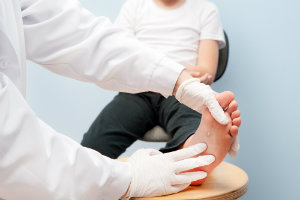
Your aunt on Facebook can swear by any number of home remedies, and most are likely harmless. However, our realm is in what has been proven through medical experience and research. Here are a few of the practices used for treating plantar warts:
Prescription-strength Medication – Most medications for warts contain salicylic acid, which will remove the wart a thin layer at a time. Most treatment plans include applying the medicine on a set schedule at home and visiting the office now and then for checkups and more direct treatment.
Freezing – Also known as cryotherapy, this involves applying liquid nitrogen to a plantar wart. This causes the tissue of the wart to die and come off within about a week. Treatments are performed every few weeks until the wart disappears, but the application of the liquid nitrogen can be somewhat painful.
Minor Surgery – In certain cases, it may be best to physically cut the wart away. This is understandably painful, so the area would be numbed. It can also cause scars to form, so it is not often the recommended course of action.
Some treatment plans for plantar warts may involve more than one method, such as freezing followed by medication. The best course will depend on the severity of a case and the needs of the patient. The Bloomington office of Dr. Kevin Powers can guide you every step of the way. Just give us a call at (812) 333-4422 to schedule an appointment.
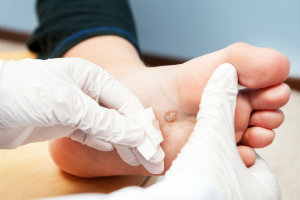 As long as people have had warts, they have come up with all kinds of crazy reasons why these bumps have appeared or vanished on their skin. Whether plantar warts on the feet or anywhere else, the stories tend to be far-reaching.
You may be well aware of the myth that touching a toad or frog will get you warts, but did you know rats and chickens are common wart myths in Asian countries? A “plain colored” chicken was considered specifically troublesome in places such as Thailand and the Philippines, as their native chickens are often of mixed colors.
Myths for treating warts can be especially amusing. According to old English folklore, you could try cutting an apple in half, rubbing each piece on your warts, putting the apple back together and burying it. Don’t have an apple? Rub a black snail against your warts instead and then toss the poor creature into the thorns! Or you could just lean in and whisper to your warts to get them to leave, often in the form of threatening to burn them if they’re not gone in a week.
Why are wart myths so common in history? It’s likely because almost everyone gets them at some point in their lives, seemingly out of the blue. And just as mysteriously as they appear, they tend to clear up the same way, too. That’s just the nature of HPV, the virus responsible for your plantar warts.
Whispering to your warts certainly won’t hurt you (at least in private), but the Bloomington office of Dr. Kevin Powers is here to help with professional treatments to clear your plantar warts faster. We’re always welcoming new patients, so call us at (812) 333-4422 for all your foot and ankle care needs.
 The pain and discomfort of rheumatoid arthritis can become a regular part of life. While medications and treatments can have a significant effect on reducing these symptoms, there is unfortunately no cure for the condition and the pain may not always vanish for good. In these cases, lifestyle and outlook can play crucial roles when you need self-management of your rheumatoid arthritis.
Apply Some Self-Therapy – Cold, heat, and gentle massage can help reduce the pain of an arthritic flare. Cold tends to be best for inflammation and heat best for stiffness, but always use whichever yields the best results for you.
Move in Ways You Love – Exercise can often improve the feeling in your joints. Even with pain, we can help you find some exercises you can perform. It should be something you enjoy doing, though; there’s no sense trying to fight pain with misery.
Rearrange Your House for Ease – The more time that is spent around the house, the more important it is to create an environment that is easy to move around in. This may involve clearing floors, creating wide areas of walking, and moving your bedroom downstairs, among other tasks.
Do Not Be Afraid to Seek Support – Nobody should feel forced to endure pain alone. Along with our professional medical support, it can also be highly beneficial for your mental health to speak with others who know what you are going through. If your pain starts to affect your emotional outlook on a regular basis, please talk about it with us or a trusted counselor.
Rheumatoid arthritis in your feet and ankles does not have to rob the enjoyment from your life. We can help you find the best ways to relieve your symptoms and get the most out of your lifestyle, such as reconstructive surgery. Call the office of Dr. Kevin Powers at (812) 333-4422 to schedule an appointment with us in Bloomington.
 Myths and urban legends exist all around us, and university towns are definitely no exception. There’s the longtime legend at Indiana University that the library is slowly sinking due to an overload of books! That’s obviously not true (or else the librarians have been bailing books out of it for decades). Myths surround other topics too, such as arthritis. Here are some things to take with a grain of salt when it comes to the condition and managing its symptoms.
There’s Only One Form of Arthritis – We’ve already debunked this in previous blogs. Arthritis can stem from many causes, from purely mechanical osteoarthritis to the autoimmune disease of rheumatoid arthritis. Knowing which kind is present has a big effect on treatment.
Only the Elderly Get It – According to the Centers for Disease Control and Prevention, about two-thirds of people with arthritis are below the age of 65. It can affect anyone, even children.
Tomatoes Make Arthritis Worse – There is a tale that eating vegetables from the nightshade family, such as potatoes, tomatoes, and peppers, can worsen symptoms of arthritis. There is no real evidence to back this up, and the nutritional benefits of these foods don’t make them worth setting aside just in case—if you like them, of course.
Tumeric Greatly Helps Arthritic Symptoms – On the other side of the food spectrum, some believe spices such as turmeric and ginger can be a natural cure for inflammation. While it’s true these spices do have anti-inflammatory properties, there’s not much science right now to determine what affect they have on arthritis and how much is needed for a tangible payoff. It certainly doesn’t hurt to include these spices in your diet, but you wouldn’t want to fully rely on them.
The truth is that managing arthritis takes personalized attention and care. If you are struggling with stiffness and pain in your feet or ankles, come see Dr. Kevin Powers in Bloomington. Our practice can help you find the best ways to keep arthritis from interfering with your quality of life—no lie! Call us at (812) 333-4422 or contact us online and we’ll be happy to schedule an appointment with you.
 There is no question that the effects of gout can throw a huge wrench into someone’s weekly routine. Nothing like waking up in the middle of the night with searing toe pain to take all the wind out of your sails during the day.
Night-time is not the right time to be worrying about gout. The best treatment by far is keeping a painful flare from happening in the first place. When it comes to how to prevent gout, a lot of comfortable rests can depend on what you ate while awake.
Gout is a form of arthritis caused by the formation of uric acid crystals around a joint, with the big toe being a favorite. This uric acid collects in the body via the breakdown of purines, a natural substance in cells and DNA. The more uric acid is dissolved in the blood, the more likely it is to form into crystals.
Fighting gout means keeping purines and uric acid levels low in the body. Doing this requires putting limits on certain types of foods:
What are much better alternatives for you? Look for whole-grain foods and high-fat dairy products, as well as plenty of vegetables. Also make sure to drink plenty of water. Some foods that might do especially well at fighting gout are cherries, coffee or tea, and vitamin C supplements.
Medications and other treatments might help you keep gout at bay. For more information on how to prevent gout and what forms of treatment might be best for you, contact the office of Dr. Kevin Powers at (812) 333-4422. We help the people of Bloomington, Bedford, and all surrounding areas have more comfortable feet and ankles—morning, noon, and night.
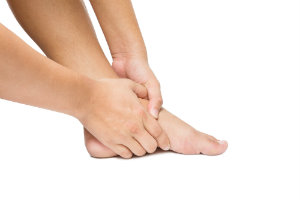 Arthritis is kind of like ice cream.
OK, bear with us here. They are similar in that when someone mentions either, you most likely conjure one image in your mind of what it is. However, that’s not the whole story. The ice cream you picture could be soft serve, hard, chocolate, vanilla, in a bowl, in a cone—there are many forms that fall under the same umbrella. Likewise, even in a specific location such as the foot, one person’s arthritis can vary widely from that of another.
Osteoarthritis is likely the form most people will initially think of when hearing “arthritis” in general. This is when the cartilage protecting a joint becomes worn and frayed through a mechanical breaking down over time. Although it is more common in older individuals, it can also be found in those who are younger.
Rheumatoid arthritis is not mechanical in nature, but actually classified as an autoimmune disease. The body’s own immune system goes haywire and attacks the protective layers surrounding a joint. This causes swelling and eventually damage to the surrounding bone and cartilage. Tendons and ligaments can also be attacked and harmed.
Gout is also a form of arthritis in the feet—most often the big toe—although it can also be found elsewhere now and then. Gout is caused by the formation of uric acid crystals around a joint. These sharp, needle-like formations can cause intense pain and inflammation, often in the form of a sudden “flare” at night.
These are more common forms of arthritis in the feet, but even more exist. If you are experiencing joint pain, don’t just chalk it up as part of life. Schedule an appointment with Bloomington podiatrist Kevin Powers instead. Knowing the causes behind your discomfort can open the way to more effective treatment and pain management. Call our office at (812) 333-4422 to take your first steps toward relief.
 There are few symbols of new arrivals more iconic than a pair of baby shoes. Mini-sized items are cute in themselves, and baby shoes are so photogenic. You can even have them bronzed or hang them from the rear-view mirror of your car (we do not recommend doing both). But for however you choose to use the shoes, does your newborn actually need to wear them?
Shoes can provide some protection for baby’s feet, and also help keep little prying fingers from removing socks. What they can also be, however, is restrictive. The bones in a newborn’s feet are still soft and developing. They don’t fully harden until around 5 years old, and it’s important to make sure obstacles don’t get in the way of forming a proper foot structure and arch.
During infancy, before walking, bare feet or socks are best. There may still be times when shoes are wanted or expected, of course, and that’s fine. Opt for shoes that are flexible, give the feet wiggle room, and don’t pinch at any points.
Once a child begins toddling around, still try to stick to bare feet when possible. Having direct contact with the ground will help better develop his or her senses of balance and stability. When some protection and warmth are needed, socks with rubber grips on the bottom are also helpful.
We are happy to provide foot and ankle care advice for new parents and parents-to-be. Call the Bloomington office of Dr. Kevin Powers at (812) 333-4422 to schedule an appointment. You can also contact us through our online form.


