
 We don’t have to tell you that becoming a parent has a lasting effect. The most obvious one is the wonderful little human (or even humans) now residing in your house. Don’t worry; the sleepless nights go away. Eventually. One thing that might not go away, however, is foot changes from pregnancy.
All the extra weight, shifts in gravity, and hormonal changes that come from carrying a child can have certain effects on the feet. The ligaments of the feet can loosen from the hormone relaxin. This can lead to them spreading out some due largely to the extra weight being carried, causing the foot to spread out and increase in size. The arch can also lower slightly.
It’s easy to think that once baby arrives, things will normalize and the foot will return to its normal shape. Unfortunately, that’s not often the case. Many new mothers are surprised to find their feet remain longer and wider even after their child is born. A 2013 study found 60-70 percent of the women they examined saw significant foot changes from pregnancy 5 months after birth, their feet growing up to a full shoe size.
The good news is that while the changes rarely seem to revert in these cases, they don’t tend to cause any pain in themselves. Having a second or third child doesn’t seem to cause much additional flattening, either. Your favorite shoes might have to hit the donation pile, but try and see it as an opportunity to update!
If your feet are causing you pain during your pregnancy, it is possible that flat feet or another condition are to blame. The office of Dr. Kevin Powers can help you find the best remedies and preventative measures to maintain foot and ankle comfort throughout your term. Call our Bloomington office at (812) 333-4422 to start receiving the help you deserve.
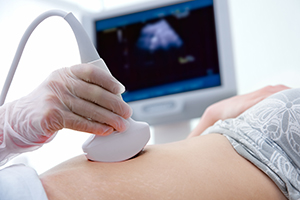 There are certain things you know to prepare for when a child is on the way. Some of them can be pretty fun; perhaps involving visits to O’Child or The Green Nursery here in Bloomington for items. One thing that might not have enough forethought, however, is days when your pregnant feet may be aching after a long day.
If swelling, weight, or a change in gait are putting your aching feet through their paces, here are some ways to help keep the discomfort at bay:
Apply Ice – This is the standard most go for, and is effective in many cases. A good practice is to wrap an ice pack in a towel and rest the feet on it for 20 minutes. Do not go longer than that, as the cold might cause damage to your skin. Some also swear by icing the insides of the ankles.
Elevate – Keep your feet above the level of your heart anytime you are able. Even just a few minutes regularly can have a positive effect in reducing swelling and pain. You can stretch your legs up a wall if you are able to, but the most important part is just getting off your feet.
Sleep on Your Side – This sleeping position can help keep pressure off the blood vessels working back toward your heart, reducing excess swelling. The left side tends to have the best effect.
Rotate to Circulate – Ankle rotation exercises can improve circulation through the area and help carry away excess fluid. Sit with one leg raised and rotate your ankle 10 times clockwise, then 10 times counterclockwise. Switch to the other leg and repeat. Perform the full rep 10 times.
If nothing you try seems to help, there might be a deeper problem (such as flat feet or plantar fasciitis) that needs a professional touch. Dr. Kevin Powers provides help for aching feet from all walks of life, and can help the wait time for your bundle of joy be a much more comfortable one. Call our Bloomington office at (812) 333-4422 to get started.
If you are a mother-to-be, your feet are probably the farthest thing from your mind as you begin your journey. There are so many other things to think about, and as the baby grows your feet begin to have an “out of sight, out of mind” experience. Or at least they would if they didn’t start feeling so painful! Pregnancy affects your feet, and knowing how can help you stay ahead of discomfort.
There are three big things that can affect the happiness of your feet during pregnancy: weight, fluid, and hormones. As you gain extra weight from your growing child, it adds force and shifts the center of gravity, leaving more pressure on the feet and knees. Second, extra fluid begins to be retained in the body to provide extra support for you and your little one. Third, the hormone relaxin begins to be released into the bloodstream, causing ligaments to loosen. The intent is to help prepare for childbirth, but ligaments throughout the body can be affected.
These three factors can contribute to different problems in your feet and ankles. Your feet can swell due to the effects of excess fluid and gravity upon them. Your arches might also flatten from all the pressure, leading to overpronation and even heel pain through plantar fasciitis. And did anyone tell you that your spreading foot bones might stay that way after birth, leaving you up to a shoe sizes larger, permanently?
If you are experiencing foot and ankle discomfort during your pregnancy, you are far from alone. It doesn’t mean you can’t do anything about it, however! Dr. Kevin Powers and his staff in Bloomington are more than happy to help you find relief from discomfort and give you one less thing to worry about before your blessed event. Use our website or call (812) 333-4422 for assistance.
Yes, we know that the “Keep Calm” meme has been overused by now. You can find fake posters telling you to keep calm while doing everything from eating chocolate to killing zombies. But when we say to keep calm to prevent stress fractures, we’re actually providing some real advice.
The hairline cracks of a stress fracture most commonly result from a too stressful change in a person’s activity. This can mean either suddenly starting a new activity, too rapidly increasing the intensity of a standard activity, or abruptly changing the environment the activity is performed on (going from running on trails to pavement, for example).
In each of these cases, one’s bones are conditioned to a certain level or type of activity. Pushing change too quickly can result in additional stress on the bones that you’re not yet ready for, causing stress fractures to form.
We know it can be exciting to start something new, or sometimes there might be lofty goals you’re hoping to achieve by a certain time. But trust us: patience and a calm approach to improvement are the best way to make sure your body is able to take what you want to dish out upon it. Starting low and increasing intensity 10 % per week is a good standard. It also pays to cross train as a way of building up overall conditioning.
For more advice on how to prevent stress fractures, or guidance recovering from any kind of sports injury, Dr. Kevin Powers is here to help. Contact our Bloomington office at (812) 333-4422 to schedule an appointment.
Sometimes history will remember your name for being a great leader or a creative genius. Other times history will remember your name because you hurt yourself dancing. Such is the case of Sir Robert Jones, a British orthopedic surgeon who discovered a distinct injury that bears his name: the Jones fracture.
In an article published in a 1902 volume of the Annals of Surgery, Sir Jones reports that he had landed on the outer side of his foot while dancing, feeling something give way. He first thought he might have ruptured a tendon, but later found them in perfect order. One X-ray later and he discovered a fracture right near the base of his fifth metatarsal (the long bone that begins at the base of the little toe).
Sir Jones quickly realized he had seen symptoms similar to his own many times before, and this regularity continued even as he recovered from his own injury. In most cases, these patients had twisted or landed awkwardly on their feet. However, there was no previous record of such a specific fracture to be found. It was common medical belief at the time that only a forceful, direct blow to the metatarsals could cause any real damage. Sir Jones, however, proved that a bad twist or roll could do so as well.
The discovery of the Jones fracture was valuable, as it can interfere with normal blood supply to the area and take much longer to heal. Knowing to look for it makes quick and correct treatment much more likely.
Sir Robert Jones was a brilliant medical mind of his era. For the sake of people who have suffered Jones fractures, we can only be grateful that he didn’t appear to be as adept a dancer as well.
If you have been in pain since a twist or roll of your foot, don’t try to ignore it in hopes it will go away on its own. Let Dr. Kevin Powers perform a full examination to ensure the right type of treatment is being applied to your injury. A good check can save plenty of extra recovery time and even chronic issues down the road! Our Bloomington office is just a phone call away at (812) 333-4422.
Our patients know they can always come to our Bloomington, IN podiatrist office to receive first-class foot and ankle care when issues arise. We love providing treatment to help fellow community members overcome painful or debilitating problems, but these are not the only services we offer!
In addition to the medical services we perform in our office, we are also proud to provide information to help you better understand the various conditions which might affect your foot health. Being educated not only allows you to make the best decisions when it comes to treatment; it also enables you to know about preventative measures you should consider using. Now, our website and blog can be valuable resources for you in this regard, but we also publish a monthly newsletter (“Foot Notes”) for you right here on our site.
So what kinds of things do our newsletters cover? Well, we discuss common foot and ankle issues, offer tips on training and footwear, share recipes and craft ideas, and hopefully give you a smile with some humorous cartoons. We also find some fun, interesting days in the month for you to mark on your calendar (June 4 was “Hug Your Cat Day,” June 18 was “Go Fishing Day,” etc.).
You can find old editions of “Foot Notes” here, but be sure to bookmark the page and keep your eye out for upcoming ones! In the meantime, don’t forget to reach out to us if there is anything we can do for you. We are committed to providing exceptional foot care services for our Bloomington, IN community, so simply give us a call at (812) 333-4422 if you have any questions, would like some more information about our newsletter program, or need to schedule an appointment with us.
A broken foot is certainly not one of the best things to happen during a busy summer. You likely won’t be marching in the 4th of July Parade—or likely not without crutches, at least—and hitting water slides will definitely need to go on hiatus for a bit. Recovering from a foot fracture can take some time, but better to wait now than risk further and longer lasting damage.
Recovery time for a broken bone in the foot can vary depending upon which bone is involved and the severity of the fracture, but 6-8 weeks is a relatively good average. In some cases, if a fracture is clean and the bones have not shifted, the area will be immobilized to allow the bone fragments a chance to reconnect. In a broken toe, this may involve taping it to a neighboring toe as a form of splint, with gauze placed between them. In other bones, this may require anything from a stiff shoe to a removable brace or full cast.
If the bones have shifted and become displaced, they may need to be manipulated back into place. In some cases, surgery might even be required to hold the bones in proper place. Recovery time can be expected to lengthen some based on which procedures are needed.
Rest, elevation, and anti-inflammatory drugs may all be recommended as part of recovering from a foot fracture. Once the bones have healed and pain has disappeared, the process is likely not fully finished yet. The area you have had to keep off or keep immobilized all this time will likely need some physical therapy to re-strengthen and regain flexibility.
Dr. Kevin Powers and our Bloomington office will see you through all of a broken foot recovery, from treatment to follow-up care. Schedule an appointment with us by calling (812) 333-4422 or using our online form.
Did you hear the breaking news that breaks down the details of the latest celebrity break-up? It seems like such a simple word, but “break” and its variations have come to take on many forms and connotations in our language. Even a broken bone is not always a simple as a plain snap.
The type of fracture that extends throughout the bone, separating it into more than one piece, can have different classifications. A bone that simply breaks and doesn’t otherwise shift is called stable, while one that shifts out of position is known as a displaced fracture. If that piece of bone manages to shift in a way that breaks the skin, it’s an open fracture. Otherwise, it’s closed.
Even what might be considered a general “broken foot” can have different names. A Lisfranc injury can be a fracture of one or more bones in the middle of the foot that can be highly destabilizing (and it’s named after a surgeon in Napoleon’s army, in case you were interested). A Jones fracture takes place in a specific area along the fifth metatarsal, beneath the little toe, and can cut off blood supply in that section. This one was named for a surgeon who discovered the injury after he got it while dancing.
Does it really matter what a broken foot or broken ankle is specifically called? Most likely not to you if you’re suffering from one! But when it comes to a podiatrist, properly identifying each different type of break is the key to knowing the best form of treatment to provide. Dr. Kevin Powers has these names down pat. If you suffer from a suspected fracture, rest and ice your injury immediately and give our Bloomington office a call at (812) 333-4422.
Bloomington has a healthy soccer scene, with players of all ages and skill levels able to learn the sport and join leagues at Twin Lakes Recreation Center. While soccer can be great fun, its nature can leave a player susceptible to injuries to the ankles, feet, and toes. With the right preparation, however, these risks can be minimized and the game can keep kickin’ along.
Sprains are a considerable concern in soccer, especially of the ankle and the joint at the base of the big toe (aka turf toe). Feet often have to make sudden moves to charge or defend, and improper shoes can cause the foot to plant into the ground and place too much stress on the ankle or big toe. The best soccer cleats to use in general games will have molded cleats or ribbed soles. Those “old school” screw-in cleats are not recommended unless the field is wet and players need more traction.
Warming up before a match is also a wise idea, as cold muscles are more likely to suffer injuries. Get the body moving with a few minutes of jumping jacks, walking, or running in place, then do a bit of gentle stretching. Toe and heel raises focus on the Achilles tendon, calves, and toes, and can be helpful. Don’t forget to cool down after a match, too!
This might not be one commonly considered, but make sure you’re using the right kind of ball, too. It’s what the foot will be coming contact with, so you want something synthetic that doesn’t absorb water and get heavier. Nothing like running up for a kick and having it feel like hitting a bowling ball!
For more help acing safety on the soccer field, or for expert treatment and recovery of sports injuries, contact Dr. Kevin Powers. Our office on 3rd Street in Bloomington can be reached by calling (812) 333-4422.
Whether you swing for the Hoosiers, run the bases with Smithville Diamonds Little League, or have your own friendly park league, baseball still remains loved by all ages. No matter the level of your play, taking some precautions to avoid sports injuries to your feet and ankles can help ensure you’ll be up for extra innings.
Sure, baseball might involve a lot of standing around at times. That might lead some to think warming up before play isn’t important, but if anything, having sudden starts and stops in the game makes performing some stretching and loosening up even more important. “Cold” muscles and tendons that make a sudden dash (such as to steal a base) are more likely to suffer strains, pulls, or tears than those that have warmed up.
Footwear is also important, and care should be taken when considering baseball cleats. While useful to the game, cleats and spikes can also increase the risk of ankle injuries and turf toe due to the way in which they embed in the ground. These shoes aren’t necessary for casual play, and younger players should start with more molded, flexible footwear until they can get a better feel for cleats or spikes. They should never be worn off the field.
Then, naturally, there’s technique. There are plenty of places where the feet can be exposed to trauma or overuse injuries: sliding into base, pitching motions, and catchers squatting to name a few. Players should be taught the proper methods and stances to reduce sports injury risks, and coaches should be mindful of when one of their players might need to sit out a bit.
If you or your child have a pre-existing foot or ankle problem, or you just want advice on the best way to gear up and train for sports, then Bloomington podiatrist Dr. Kevin Powers can provide the expert help you need. Call (812) 333-4422 to schedule an appointment.


