
It’s time for Bloomington to get ready for Halloween! After getting in the mood with the Festival of Ghost Stories Oct. 30, you can go out with your little ones on Oct. 31 to bring home a candy haul. If you’ve developed a bump on your foot that isn’t part of your costume, however, it very well might be a ganglion cyst. You probably want to shrink it down, but what can you do?
Unfortunately, there isn’t a whole lot that can be done at home to treat a ganglion cyst. There’s an old “home remedy” that involves striking the bump with a heavy object, such as a thick book. Don’t do this! One, it will likely hurt like the dickens, and two, you could end up adding a foot injury on top of that bump! “Popping” the cyst with a needle is also a poor idea, as it often doesn’t work and may raise your risk of infection.
The best treatment for a cyst comes through professional means. If a cyst needs treatment, we might recommend aspiration, which is just a matter of drawing the jelly-like fluid from the bump using a needle. The cyst might just return after this, so sometimes a steroid is injected to try and prevent that from happening.
Other options for treatment include immobilizing the area with a splint or brace to keep the cyst from growing or relieve pain, should it be causing any. If other forms of treatment aren’t effective, surgical removal may also become an option.
In many cases, however, no treatment needs to be performed at all. Instead, it might be best just to wait for the cyst to disappear on its own. Whatever the route, we’ll be happy to discuss the full range of options with you to find comfort and relief. Schedule an appointment with Bloomington podiatrist Dr. Kevin Powers by calling (812) 333-4422 or use our online form and stop worrying about any bumps in the night.
It’s easy to look back on our ancestors and feel superior in our knowledge, but there are still plenty of things left for us to discover and understand. We only recently learned that our space neighbor Mars contains liquid water; now we need to learn more about where it comes from and what it contains. There are still some mysteries in our own bodies as well, such as why a ganglion cysts forms on the foot. It might not be as exciting a mystery as water on Mars, but at least it’s closer to home.
A ganglion cyst is a round or oval lump that is filled with a translucent, jelly-like fluid. It can develop along the tendons or joints in the ankles and feet, although they might also show up on the wrists or hands as well. They are harmless growths in themselves, by which we mean they’re not cancerous. They might still cause pain or discomfort depending on where they grow, however.
So what causes a ganglion cyst? We’re still not fully sure! It’s another liquid-involved mystery, and it can happen right in our own bodies. What we suspect is that a cyst begins to develop when the tissue surrounding a joint or tendon begins to move or bulge out of place. Some sort of significant traumatic event might cause the conditions to become ripe for a cyst to form, but so might repeated smaller trauma, such as the impact of a shoe against a foot while running.
If you do have a lump on your foot, you probably won’t take much solace knowing you’re on the frontier of medical territory not fully charted. But just because nobody knows exactly why a cyst is there doesn’t mean we can’t take care of it! Call the office of Dr. Kevin Powers in Bloomington at (812) 333-4422 to schedule an appointment. We’ll check to make sure that lump isn’t something to worry about, then provide the best in treatment, if necessary. Take the first steps toward peace of mind and relief today by contacting our office.
Sometimes what looks like a common object can be something unexpected. What looks like a plain vest, for example, can help hearing-impaired people understand words. This invention and many other cutting edge materials will be the showcase of “Real Life Science” Materials Science” at WonderLab on Oct. 25. If you have a lump on your foot, you probably want to know what it’s made of, too. Odds are good it’s a relatively harmless ganglion cyst, but how do we tell?
A ganglion cyst, which is a benign lump that tends to develop along tendons and joints, has a few simple qualities that can be tested. These lumps typically range in size from that of a pea to about an inch in diameter. Placing pressure on a cyst can cause discomfort or tenderness. And, although it might seem a bit silly, we may shine a light at the lump to see if it passes through. That can tell us whether the lump is filled with liquid (like a cyst) or is completely solid.
If additional testing is needed, imaging tests such as X-rays and ultrasounds can help narrow the field and rule out other possible causes. A sample of fluid can also be removed from the cyst with a syringe—a process called aspiration. This fluid can then be examined to confirm that the lump is indeed a ganglion cyst, as the fluid will be thick, jelly-like, and clear/translucent.
If you have a lump on your foot, it’s best to know what stuff it’s made of. It not only provides peace of mind, but early action in the case it turns out to be something more serious. Call our Bloomington office at (812) 333-4422 and schedule an appointment for Dr. Kevin Powers to examine the health of your feet.
Mobility is a crucial element of freedom for many of us, and we will struggle against anything that tries to impede it. This makes a condition such as foot drop, which affects the ability to lift the front of the foot, especially frustrating or terrifying. In our human determination, we try to compensate my lifting the knee higher than normal or swinging the leg wider. To provide real help, however, means getting to the source of the problem, and sometimes that might ultimately mean surgery for drop foot symptoms.
Not all cases of drop foot may benefit from surgery, and not all should. Options will depend on what the underlying cause of the problem is, and sometimes non-surgical methods such as use of an ankle/leg brace and physical therapy can comfortably counteract the condition.
In other situations, particularly when the nerve responsible for forefoot motion is compressed or damaged, surgery could be the best option for restoring mobility. Surgery might be able to decompress the nerve, or a nerve graft or transfer could be performed to repair it.
In more severe cases of foot drop that are unfortunately permanent, a fusion of the foot and ankle joint or the transfer of tendons from stronger muscles may be able to improve one’s gait and stability. It will not restore full motion, but it could provide the best possible alternative.
Treatment for drop foot can take many forms, but all seek to help you regain your control in the best ways possible. Bloomington podiatrist Kevin Powers can help navigate the possibilities and determine the best route for you. Schedule an appointment with our office by calling (812) 333-4422 or fill out our online form.
If you love seeing happy pets bounding about their forever homes, then you might want to consider supporting the Run for the Animals this Oct. 4 at Woolery Mill. This 5K run/walk and 1-mile dog walk helps support the Monroe Country Human Association. If foot drop interferes with your ability to lift the front of your foot and move like the spritely pup you once were, focused exercises might be able to provide some improvement.
Foot drop (also called drop foot) is a condition in which the muscles responsible for lifting the front of the foot suffer from weakness or paralysis. Certain exercises can focus on the crucial elements of strengthening these muscles and improving flexibility, helping the front of the foot clear the ground easier. Following are some sample maneuvers:
Foot and Toe Flex – Sit on the floor with legs extended in front. Flex the foot toward your body so that toes move back and the heel lifts off the ground. Hold for several seconds, then curl your toes down and stretch the foot in the opposite direction. Perform as many repetitions as you can.
Ankle Rotations – Sit in a chair with your back supported and raise a leg into the air. Slowly turn the foot inward and hold, then turn outward and hold. Repeat six times with each leg. Once this becomes easier, ankle weights could be added for more challenge.
Toe Pickup – This one can be kind of fun. Place a few marbles on the floor and try to pick them up using your toes. This can target the smaller foot muscles for conditioning.
There are even more exercises with the potential to help with drop foot, but it is best to consult with a professional before beginning any kind of serious regimen. Dr. Kevin Powers in Bloomington is happy to help you find the best and safest treatment options for your specific needs. Call our office at (812) 333-4422 to schedule an appointment and get started toward stronger mobility.
Treatment for foot drop isn’t easy to package into one neat box. A number of underlying problems can be responsible for a decrease in mobility and sensation in the foot, and a full treatment plan will often be somewhat dictated by which cause is discovered. This is not a condition that should be handled on your own, however, and our expert guidance can find the best treatments and management options for your specific case.
When it comes to directly treating the symptoms of drop foot itself, custom-made orthotics can often prove helpful. Splints, foot and ankle braces, and other devices can help properly align the foot and aid in walking. The right orthotic can help improve the high-stepping gait some patients develop to clear the front of the foot above the ground, and some options can be worn within the shoe.
Another conservative treatment that often provides marked improvement is physical therapy. A professionally guided regimen can target and strengthen specific muscles in the leg and foot, improving one’s flexibility and motion. This, in turn, can lead to an overall better and safer gait.
Going a little deeper into treatment, nerve stimulation therapy can provide electrical assistance to the nerve that controls the lifting of the foot. The stimulus is provided externally.
Surgery, if more conservative measures don’t provide enough improvement, might also be turned to as an option. Releasing the tissue surrounding a stressed nerve can sometimes restore lost sensation and strength to the foot and ankle. This procedure can be performed on an outpatient basis.
Whatever the cause of drop foot, you can rely on the expertise of Bloomington podiatrist Dr. Kevin Powers to seek the root of the problem and tailor a treatment to your needs. Schedule an appointment with our office by calling (812) 333-4422 to take the first step toward a more confident stride today.
We move our feet so often every day that we sometimes take the complexity of the act for granted. It’s such an everyday phrase for us, like saying how Tony Bennett’s performance at Indiana University Auditorium on Sept. 20 will really “get your feet moving.” But what if you have trouble getting your feet moving? What if you can’t get the front of your foot to cooperate so easily anymore? That might be foot drop.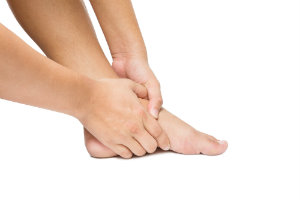
Also known as drop foot, this condition is the result of a paralysis or weakness of the muscles that control the front of the foot. This often causes the front of your foot to drag along the ground, or you might lift your knee higher to compensate.
Foot drop is not a condition itself, but the symptom of a deeper problem. A variety of different causes can be responsible, including diabetes-related neuropathy, disorders such as ALS, multiple sclerosis and muscular dystrophy, or damage to the peroneal nerve through compression or trauma.
A big part of treating drop foot is identifying and addressing that underlying problem, but actions can still be taken to help the foot weakness itself. Depending on the severity of the problem, physical therapy, orthotics, and nerve stimulation procedures can all improve one’s gait and comfort. If conservative measures don’t work, surgery might be considered to improve strength and mobility.
If you or someone you know is having difficulty lifting one or both feet, the Bloomington office of Kevin Powers, DPM wants to help. Our professional evaluation can help determine the scope of the problem and start on the proper care. Schedule an appointment with us by calling (812) 333-4422.
If a sharp jolt of heel pain greets you now and then—and especially in the morning—you are not alone. Painful heels are common complaint, and plantar fasciitis is the number one cause. The stress of repetitive actions such as those found in running or added pressure from weight gain or pregnancy can cause damage or inflame the plantar fascia that runs beneath the arch of the foot to the heel, causing discomfort. Thankfully, heel stretches and other exercises can help prevent aggravating your plantar fascia and may provide some relief.
If your plantar fascia is plaguing you, one spot that may need some stretching is your calves. Tight calves and produce additional stress on the heel and, in turn, the plantar fascia. To help loosen those muscles, try the following stretch:
There are also moves you can try to condition the plantar fascia itself, each which involves sitting in a chair:
Remember to ease into these exercises at first, slowly building up as you, your muscles, and your plantar fascia grow more familiar with them. If heel pain still plagues you, however, then make an appointment with Bloomington podiatrist Dr. Kevin Powers. We can help you get to the source of your discomfort and provide treatments such as orthotics and pain therapies that will bring your heels back to comfort. Simply call us at (812) 333-4422 to take the first step today.
Life can be full of choices that must be weighed against each other. Should you sleep in or commit to a morning run? Should you sample more of the food at the annual Bloomington Garlic Fest or deodorize for that night’s date? Or (and you might have seen this one coming) should you wear outrageous, head-turning shoes or opt for more sensible varieties that don’t risk heel pain? 
It’s not just high heels that can cause problems in the back of your feet, although they’re definitely a prime culprit. Most have rigid backs which can stress and irritate a small bony enlargement in the heel—a condition not-so-fondly referred to as “pump bump.” This irritation can in turn contribute to additional pains such as bursitis, blisters, and Achilles tendonitis. If you want some elevation, it’s better to stick to heels that are 2 inches or lower; and even then wear these in moderation.
It might seem sensible to go to the other extreme and wear ballet flats or flip-flops. Both varieties of shoes tend to be very lacking in arch support, which can place excessive strain on the foot and result in sharp heel pain from plantar fasciitis. If you absolutely must have to put your feet in these kinds of shoes, consider custom orthotics to provide the cushioning you need in your ballet flats, and sportier sandals or toning shoes as a more supportive alternative to flip-flops.
A little compromise can go a long way when it comes to your heels. While shoe trends are constantly changing, heel pain has a habit of sticking around for much, much longer. If you need help with painful heels or would like more advice on avoiding them, please give Dr. Kevin Powers in Bloomington a call at (812) 333-4422.
Residents of Bloomington and the surrounding area will be meeting in the Chase Bank Drive Through parking lot Sept. 12. It’s not to break the Guinness World Record for most people making a deposit at the same time, but to start off the Bloomington 5K Breakaway run and walk! You’ll want your feet in prime shape if you want to get the most out of this event, and heel pain from plantar fasciitis just isn’t going to cut it. If you suffer from this condition, it’s best to be treating it and getting cleared for running before deciding to hit any pavement.
The best treatment for plantar fasciitis can depend on one’s specific case, but differing methods can help. If a tight calf muscle and/or Achilles tendon are causing stress to the plantar fascia, then stretching and strengthening all three of these areas can have positive benefits. Physical therapy can target the stretches that may be needed, and the use of a splint at night can hold the calf and Achilles tendon in a lengthened position. If heel pain is especially rough in the mornings, then a night splint can definitely be worth looking into.
The use of custom orthotics can help correct abnormal foot structures that are placing excessive stress on the plantar fascia, spreading pressure across the feet more evenly. We are experts in orthotics and would be more than happy to consult with you regarding this possibility.
In more severe cases of plantar fasciitis, steroid injections or surgery may be considered as options. These both have pros and cons, however, and more conservative treatment options will almost always be attempted first.
If heel pain is ruining your runs, don’t try and ignore it. Chronic problems such as these only tend to get worse over time! Call the office of Kevin Powers, DPM at (812) 333-4422 and schedule an appointment for an evaluation today.


