
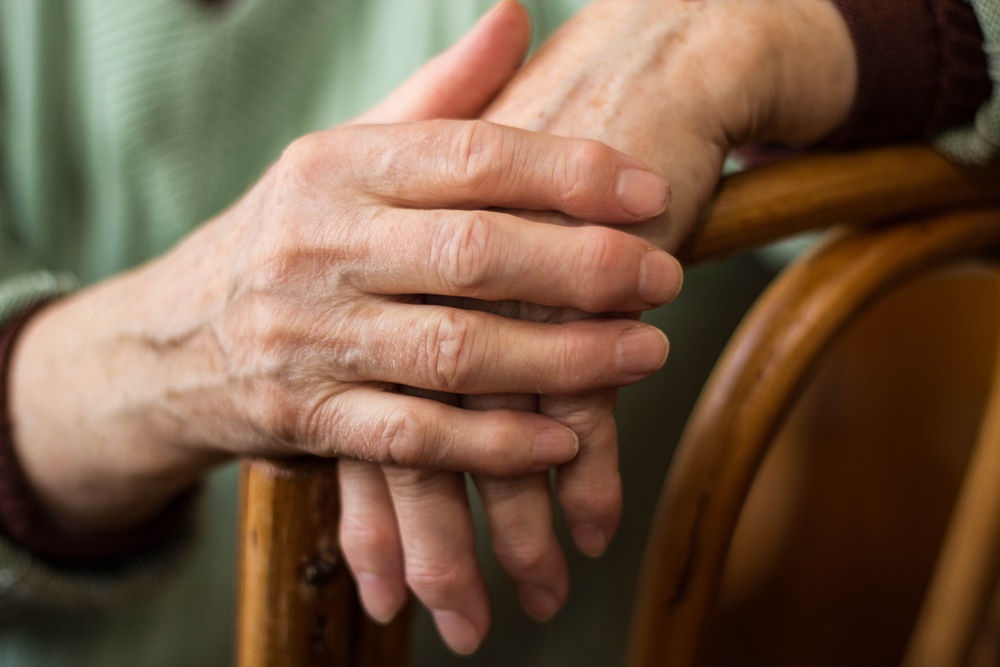
 Exercise and arthritis seem like two things that should not go together, like peanut butter and salsa or pinkie toes and end tables. If you have aching joints that aren’t what they used to be, why would you even want to move them more, right? However, not only is exercise shown to help joints stay supported and flexible, it can also keep overall pain down as well.
We’re not saying you have to run a marathon, of course. The best kind of exercise for arthritis is one that will get you moving without placing too much extra stress on affected joints. Simple walking is perhaps the first go-to for effective exercise. You can choose to go on a treadmill, giving you control over speed and intensity, or you can go for a scenic stroll outdoors and take in the stress-relieving effects of nature. If you need further weight relief on your joints, try learning how to walk in water.
If you want to get a bit more varied in the water, swimming is also an excellent activity that supports your joints while building endurance. For more of a focus on certain joints or parts of the body, a water aerobics class might be able to provide you the targeting you need.
Back on land, other classes can also help you achieve relaxation, pain relief, toning, and balance. Studies show that yoga can be helpful in reducing the progress of rheumatoid arthritis, while tai chi is effective at sharpening the connection between mind and body, decreasing stress and improving awareness. Ideally, you would want to find an instructor who keeps your condition and needs in mind, and who is willing to show you modified techniques if necessary.
Before picking up any new form of exercise for aching joints, however, it’s best to consult with an expert to make sure the activity is safe. For help and advice regarding arthritis pain and treatments, call Dr. Kevin Powers at (812) 333-4422. Our Bloomington office will be happy to help.
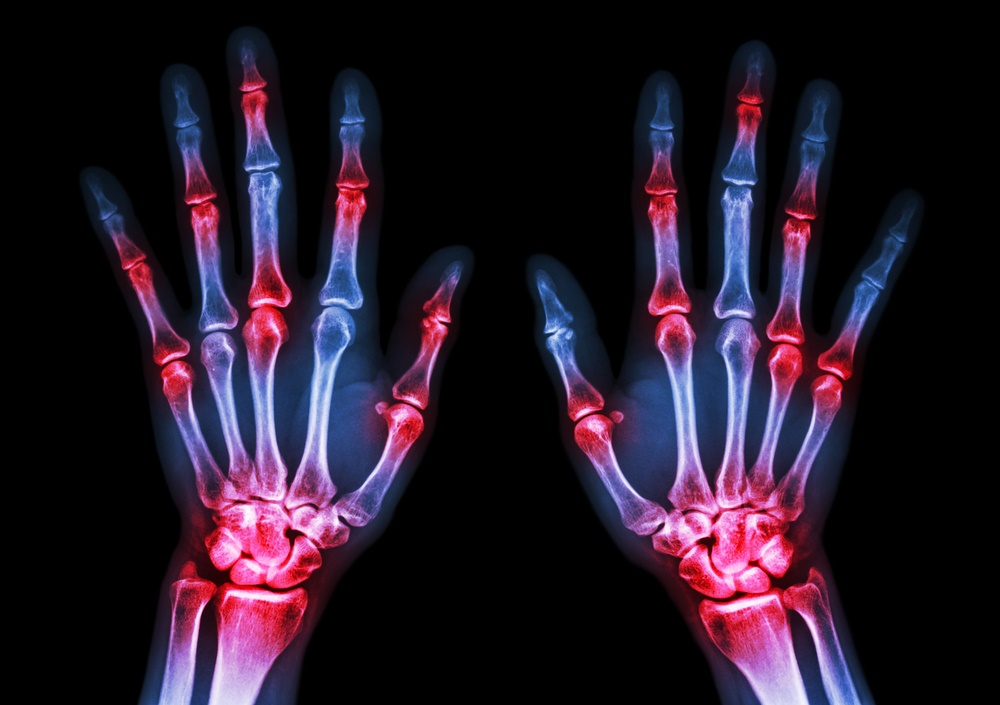 If you have a taste for classic plays, Shakespeare in the Park is always a wonderful destination. The Monroe County Civic Theater will perform Cymbeline at Waldron, Hill and Buskirk Park June 11-14. Natural elements are a common theme in The Bard’s works, as in many naturally-based home remedies you might wish to try if you suffer from joint pain due to arthritis.
We do not guarantee that any or all of these techniques will work, but it can be interesting to see what people have suggested over time. If something does alleviate pain for you, great! If not, or if you have any questions about Learn the causes of arthritis. whatsoever, please contact us and we will be happy to help you find effective solutions for you.
So what has been attempted to relieve arthritis pain?
Flax Seed Oil – This oil contains Omega-3 fats, which can help the body produce anti-inflammatory molecules. One tablespoon of oil three times daily is often the recommended usage. The oil or the seeds themselves can be added to foods.
Alfalfa Seeds – A tea derived from alfalfa seeds is said to help alleviate joint pain. Add one teaspoon of seeds to one cup of boiling water and drink up to four cups daily. Adding capsules or actual alfalfa to your diet might also help.
Turmeric – This spice from Indian foods has become popular as of late! 500-1,000 mg turmeric capsules three times daily allegedly results in reduced inflammation and arthritis pain relief for many.
Ginger – Another spice said to have benefits, supporters suggest consuming a half-inch of fresh ginger peeled and sliced with every meal.
It’s sometimes good to experiment, but it’s always best to seek a professional opinion before making any big lifestyle changes. Dr. Kevin Powers and his friendly staff can help you determine the best and safest techniques to reduce joint pain and find relief. Contact our Bloomington, IN office by calling (812) 333-4422.
 Want to craft a slab of Indiana limestone into a work of art? You can get a chance during the Indiana Limestone Symposium in Ellettsville, running June 7-27, 2015. Sign up for all three weeks or pay as you go by the day—you’ll receive the tools and instruction you need. Just like the variety of tools available to take on limestone, there are various types of arthritis that can cause a joint breakdown as well. We can’t show you how to make a swan for your garden, but we can instruct you on your foot and ankle health.
There are three main types of this disease that can strike the foot and ankle, each with a different source.
Osteoarthritis is what many likely first imagine when they hear of a joint breakdown. This is the “wear-and-tear” form of the condition, in which the cartilage that provides cushioning between the bones of a joint wears away over time. Eventually, the bones themselves can begin rubbing against each other, causing pain.
Rheumatoid arthritis commonly begins in the foot and ankle, but can spread to other joints of the body. It is an autoimmune disease that targets the synovium, the lining that surrounds and nourishes joints. The synovium becomes inflamed, and eventually the other parts of the joint can become swollen and damaged as well.
Post-traumatic arthritis can happen years after sustaining an injury such as a sprain or fracture. A joint may become affected in a way that erodes the cartilage between the bones, much as with osteoarthritis. A joint that was injured in the past is much more likely to become arthritic than one that is pristine.
Regardless of the cause, a gradual breakdown of the joints is best addressed as soon as possible to avoid whatever further deterioration we can. Call Kevin Powers, DPM at (812) 333-4422 for a full evaluation and the tools you need to fight back against painful joints.
 Time to get the joint jumpin’! The Stardusters Little Big Band will be performing May 27 at Player’s Pub, bringing their swing and big band styles from 6-9 p.m. If your aching joints keep you from toe-tapping, you might have a form of arthritis. Not all are the same, though.
To understand the causes of arthritis, it pays to know what all is in a joint. A joint is where one bone moves on or connects to another, but there’s more involved than just that. The two bones of a joint are held together by ligaments, which form a capsule around them. Cartilage between the bones keeps them from grinding each other down as they rub, and synovial fluid fills the rest of the capsule to provide nutrients to the bones and cartilage.
When arthritis develops, something has gone wrong with one or more of these elements. The type of arthritis usually dictates what is affected. Here are a few:
Osteoarthritis – The cartilage becomes stiff and wears down in areas. As this changes the shape of the joint, ligaments and tendons can become stretched and painful, and the bones themselves may begin rubbing directly against each other.
Rheumatoid Arthritis – The immune system begins attacking the body’s own tissues; in this case the membrane that creates synovial fluid. This can cause swelling, and may eventually invade the other parts of the joint as well.
Post-traumatic Arthritis – This is similar to osteoarthritis, but stems from an injury. A fracture or dislocation can cause a joint to shift, making the cartilage begin to wear away. It can take years for this condition to develop, but an injured joint is many times more likely to become arthritic than an uninjured joint.
Regardless the cause of your arthritis, there are treatments that can help you find relief and get you in a more comfortable mood to swing. Call the office of Kevin Powers, DPM at (812) 333-4422 to schedule an appointment today.
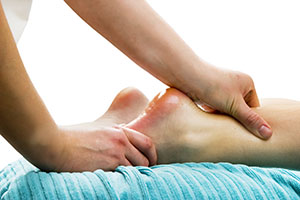 There are several remedies to try when treating the thickened skin of a corn. A pumice stone will help remove the dead skin from the bump, reducing its presence and accelerating recovery. Soak your feet in very warm water for about 10 minutes to soften the skin, then gently rub the stone against the affected area for up to 5 minutes. Pat your feet dry and repeat for several days until the corn vanishes. Remember to be patient, however; the goal is not to grind the corn off in one sitting. That’s only going to cause pain and a potential infection.
Other ingredients can help further soften or exfoliate the affected skin. Dabbing some castor oil or diluted white vinegar (1 part to 3 parts water) onto the corn, or soaking in a baking soda solution (3 tablespoons in a basin of warm water) can be effective too.
If corns continue to bother you, give the office of Dr. Kevin Powers a call. We can pare down your corns and also help with treatments and orthotics to keep them from reappearing. It is important to mention, if you have diabetes, don’t attempt any treatments yourself as you may risk injury and infection. We’d be happy to handle things instead.
Find balance without foot pain. Call our office in Bloomington at (812) 333-4422 to schedule an appointment today.
Is it too early to think of summer yet? Swimming? Sunbathing? The Taste of Bloomington? Fourth of July fireworks at Monroe Lake? Hopefully not, because it’s already getting us excited! If you want to get your feet summer ready, it’s best to start now – especially if you have dry skin. Follow these tips and you can be ready for sandal weather before you know it.
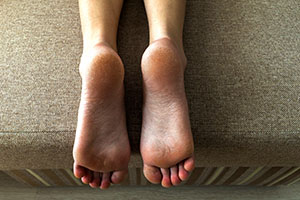 A great time to set your mind on healthy feet is after a bath or shower. The 5 minutes or so after you’re out is a prime opportunity to moisturize your feet while the skin is still damp. While you’re in the shower, make sure to use a mild soap or body wash with moisturizer, and don’t stay in too long or in too hot of water. It might seem counter-intuitive, but staying in hot water too long can actually dry out your skin.
Night-time is the other right time to focus on the dry skin of your feet. You can get feet wet and once soft, use a pumice stone or washcloth to gently rub off dead skin cells.
After scrubbing, it’s time to apply a moisturizer for the night. To find a good brand that works for you, look for effective ingredients such as coconut oil, olive oil, mentholated rubs, and petroleum. Rub on the moisturizer of your choice, then don a pair of old, clean socks to seal it in (and protect your sheets). When morning comes, remove the socks and wash your feet. Repeat this ritual each night and you should see an improvement in dry skin and cracked heels.
If your feet just aren’t getting summer ready no matter what you try, it may be sign of an underlying issue. Contact the office of Kevin Powers, DPM at (812) 333-4422 to schedule an appointment. We’ll help you get to the root of the problem and find the right treatments so your feet can take the heat!
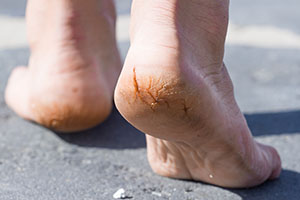 This coming May 3—and on the first Sunday of every month—the Soapy Soap Company hosts hands-on workshops that not only include a short tour of their operations, but the chance to create your own little soap sculpture to take home! If you suffer from dry skin, the experts at Soapy Soap are likely to point you toward one of their moisturizing brands. If you suffer specifically from dry heels, we also have some advice for you.
Our feet naturally have a harder time staying moisturized than other parts of our bodies, as they lack oil glands. Instead, they rely on a higher number of sweat glands, but this isn’t always enough. A variety of factors can cause dry heels and feet, including dry winter weather, taking overly hot showers or baths, and even using harsh soaps. Certain disease or conditions, such as eczema and diabetes, can also cause the feet to dry out. Sandals and open back shoes can also cause the skin on heels to become dry and crack.
Keeping your heels clear of dryness is a matter of adding and retaining moisture. First, keep hydrated from within by drinking a healthy amount of water. This will help keep the sweat glands in your feet productive.
Next on your list should be moisturizing externally. The best times to moisturize are after bathing and right before bed. You can use a standard moisturizer, but vegetable oil and Vaseline can also be effective. Seal in the moisture by wearing thick socks after application and wearing them to bed. You’ll likely want to make it an old pair of socks, too, as you won’t want to wear these around town the next day!
If dry heels continue to pester you after trying to treat them yourself, or if they are creating nasty, painful cracks, contact the office of Kevin Powers, DPM. We can help you find more advanced solutions to your dryness and prevent potentially worse problems such as infections. Call our Bloomington office at (812) 333-4422 to make an appointment.
Can you tell between a Zinfandel and a Merlot? How about different varieties of tulip? You have the chance to learn at Oliver Winery, whose annual floral display is blooming until mid-May. The winery says this year’s display is three times larger than ever and includes a rarely viewed Asiatic buttercup! We’re not sure what that looks like, to be honest, but we do know the differences between corns and calluses. (It’s a glamourous job, but someone has to do it.)
Corns and calluses both form from the same reasons. Extra rubbing of the foot against an object such as a shoe (or even another part of the foot) causes friction. The body responds by thickening the skin at that spot, protecting it from injury. Shoes are often to blame for this friction, but it can also be the fault of an abnormal gait or deformity.
So how do you tell a callus from a corn? A callus tends to be broad and forms along the bottom of your foot, most often just beneath your toes. They tend to not be painful, but can be in some cases.
A corn, on the other hand, tends to be smaller than a callus with better-defined edges. They are somewhat round in shape, form mostly along the tops and sides of the toes, and are more often painful when pressed against.
Regardless of whether you have a corn or a callus, you don’t want to keep it around to admire its vintage. Schedule an appointment with Dr. Kevin Powers and we can get to the source of the problem, treating both your thickened skin and its underlying cause. Call our Bloomington, IN office at (812) 333-4422.
Too many people hold off on visiting us because they feel their foot or ankle pain is a normal or unavoidable part of life. This just isn’t true, and we highly encourage you seek help for any problems or discomfort you have sooner rather than later. However, we know there’s another big reason for hesitation: money. It can be difficult to prepare to pay medical costs, especially if a condition arises out of the blue. We understand, and we don’t want you to avoid receiving the attention you need due to financial restraints. That’s why we offer financing options to assist you.
Advance Care offers financing options with up to 14 months free of interest. The interest rate after the free period will be based on your credit history and current financial situation. There are no prepayment penalties or punitive late fees involved, and decisions are often made very quickly after applying via their website. Co-applicants can also be accepted if necessary.
If you do not qualify for Advance Care or do not receive enough credit to cover a procedure, then MyMedicalFunding may be able to help. Installment loans provided through MyMedicalFunding are set at low, fixed-interest rates with fixed monthly payments and no prepayment penalties. Terms can last up to 60 months.
For more information on either of these financing options, visit www.advancecarecard.com or ww.mymedicalfunding.com. We are also more than happy to answer any questions you may have on payment plans. Just call our Bloomington office at (812) 333-4422.
For some fancy footwork from talented up-and-comers, attend the free Hammer and Nail collaboration at Buskirk-Chumley Theatre on April 14 and 15. Student choreographers, composers, dancers, and musicians all team up to create original programs. It’s a one-of-a-kind performance, but one you might not enjoy as much if the ball of your foot feels under the hammer. Here are some home remedies for metatarsalgia to try when pain and inflammation hit.
Ice can be a faithful companion in fighting ball of foot pain. Apply cold to the area for about 20 minutes several times each day, making sure not to damage the skin from exposure. Take these times to elevate and rest your foot as well, especially after standing or walking for a while. People with diabetes should not put ice on their feet for any reason.
A better pair of shoes can also do wonders for metatarsalgia discomfort. A flatter heel and more room may be what you need, but you might also benefit from shoes that are better suited for the shape of your foot, gait, and activities. Shoes can also be boosted with metatarsal pads or custom orthotics for additional relief and comfort. A firm running shoe is also good for metatarsagia.
Over-the counter anti-inflammatory medications such as ibuprofen can also offset pain and inflammation when needed. Remember to only use these medicines as directed.
If these remedies for metatarsalgia haven’t worked, and pain continues to pound away at the ball of your foot, call Dr. Kevin Powers. He and his helpful staff will help you get to the source of the problem and find more effective treatments. Call our Bloomington office at (812) 333-4422 to schedule an appointment.


