
DJ, drop the beat! On Tuesday, we’re celebrating these entertainers who can turn any event—a wedding, bat mitzvah, or birthday—into a dance party. However, while a beat drop is fun, a foot drop is definitely nothing of the sort. Let’s talk more about when we recommend physical therapy for foot drop.
Foot drop is usually caused by an underlying problem. This condition can damage the peroneal nerve and cause paralysis on the front of the leg, including the toes. It can also create pain and burning on the top of the foot. The nerve below the knee can be damaged by an ankle sprain, fracture, or surgery and injury to the knee.
Once Dr. Powers diagnoses the cause behind your problem, he’ll give you a treatment plan. Your treatment really depends on the underlying problem. This may require physical therapy, but could also include braces, orthotics, and surgery. If surgery is an option, Dr. Powers is highly qualified. In fact, he’s one of the only doctors specially trained and certified in drop foot surgery.
Physical therapy is going to strengthen muscles in the foot and leg and improve flexibility. At Kevin J. Powers, DPM, we can recommend the best physical therapy for your foot drop. This may include electrical stimulation of the nerves when you walk. If physical therapy doesn’t help, know that you’re in good hands when it comes to surgical procedures.
Look no further than Kevin J. Powers, DPM, to get the best physical therapy for foot drop. To make an appointment in our Bloomington, IN, office, call (812) 333-4422. If you can’t make it to Bloomington, Dr. Powers also holds permanent office hours on Friday from 8 AM to 3 PM in Washington, IN, at the Daviess Community Hospital.
Ice cream is more than 5,000 years old! It’s true, people in China were mixing sweetened juice with snow and ice as far back as 3,000 BC. Nowadays the cold concoction even has its own holiday. Strawberry Ice Cream Day, on Thursday, January 15, celebrates the creamy goodness that we know and love. Nothing can perk you up on a crummy day better than a pint of good ole’ Ben and Jerry’s. When you’re dealing with arthritis pain, however, it’s going to take more than a few scoops of this treat to keep your spirits high. Let us offer some suggestions to help with your pain.
Since we were talking about a cold treat, you could start your pain relief with an ice pack. When your feet are inflamed and painful, ice can instantly relieve your pain and bring down swelling. Massage is another way to immediately soothe tension and discomfort. Apply lotion to your hands and transfer that moisture to your feet using kneading motions. You can also roll a tennis ball under your arch to get a good massage.
Make sure you wear shoes with solid arch support, low heels, and a wide toe box. You might benefit from using a cane to take weight off the painful foot. Placing a custom orthotic inside your shoe can also cushion that painful joint. If you’re interested, we would love to explore options for orthotics for you at our office.
Have you feet checked once a year with Kevin J. Powers, DPM. That way, we can pinpoint any problems you’ve had in the past year and find ways to correct the issue. This is also a good time for us to check up on your orthotics, shoes, or any other treatment plan we’ve prescribed for your issue.
If you feel arthritis pain, it’s best to visit our office right away—don’t wait until your yearly review. Call our office in Bloomington, IN, at (812) 333-4422 to schedule an appointment. Dr. Powers also holds office hours at the Washington Daviess Community Hospital on Fridays from 8 AM to 3 PM.
The winter season is in full swing and this means it’s time for fun activities like sledding, skiing, and ice skating. Speaking of ice skating, Frank Southern Ice Arena now offers public skate daily and allows Bloomington residents to have fun as they circle the rink. Whether skating or skiing, wintertime activities are certainly a lot of fun, but they do come with the risk of injury, including sprained ankles. Should this happen, it’s important to know what to expect from ankle sprain recovery.
When you look at all the injuries that can possibly be sustained by humans, ankle sprains are actually quite common. Sure, these can be caused due to wintertime activities or athletic events, but they also happen just from moving around, especially with the icy conditions that winter brings. When you slip on ice, whether at the rink or in the parking lot, you could potentially sprain your ankle.
Ankle sprain recovery following an icy fall will begin with following the R.I.C.E. guidelines:
If this is not sufficient, you may have a Grade II sprain, which will require additional time for healing. Perhaps our office may decide to issue you a splint. With a Grade III sprain, surgery may be needed, although this is rare. We may have you wear a walking boot for two to three weeks to stabilize the affected area.
The best treatment is always to avoid the problem in the first place, so please be careful during the icy winter months. Walk slowly, wear shoes or boots that have good grip, and walk flat-footed to keep your center of gravity stable. If you live in the Bloomington, Bedford, Indianapolis, or Ellettsville areas and need expert treatment and care following an icy fall, call our office at (812) 333-4422 or schedule an appointment online with Kevin J. Powers, DPM, today!
A new year, a new foot. We’re talking about bunion treatment! Take a step in the right direction this year and invest in some treatment for, and prevention of, that lump on the side of your inner foot. Turns out, it’s as easy as a roomy pair of shoes, some orthotics, and maybe a surgical consultation with Kevin J. Powers, DPM.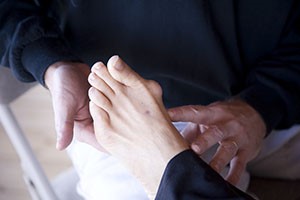
First, avoid tight-fitting shoes and start wearing a roomier pair of shoes with low or flat heels, a wide toe box, and support for your arch. Bunion pads and a pair of custom orthotics will also take away some of your pain. However, they won’t cure a bunion. Stretching, physical therapy, and toe straightening splints may relieve pain, but are also not successful in making the problem go away. If you already have this extra bony growth on the side of your big toe joint, it may be best to discuss surgical options with Dr. Kevin Powers.
The good news is that Dr. Kevin Powers has performed hundreds of bunionectomies during his 25 years of practice as podiatrist. You can trust that a recommendation for surgery comes from expert experience and genuine concern for your foot health and quality of life. In fact, the smaller your bunion, the easier it is to correct your problem with a less-complicated surgery.
Put one foot in front of the other—get bunion treatment from Kevin J. Powers, DPM, in Bloomington, IN. If you feel like you might be a good candidate for surgery or want to try custom orthotics, call our office at (812) 333-4422. We’ve also made it easier to get help with Dr. Powers’ new permanent office hours at Daviess Community Hospital in Washington, IN, on Fridays from 8 AM to 3 PM.
I spy with my eye something green—it’s the Inaugural Festival of Trees, open until January 3 at the Indiana History Center in Indianapolis. The exhibit features 25 trees all decked out in their own special themes, including “Santa’s Workshop” and “Home for the Holidays.” Just make sure you keep warm; you don’t want to be walking around with cold toes that feel like they’ve been to the North Pole and back!
Please note that these tips only apply to mild cases of cold feet and frostnip. If you feel like you may have frostbite, do not try to warm the affected tissue at home. Instead, please visit the emergency room as soon as possible.
For cases of cold toes, you can rewarm the area with a simple foot bath. After you dry your digits, make sure to slip on some warm socks. You can also wrap a heavy blanket around your feet. Wrapping them more tightly ensures that the blanket will trap your body heat, keeping the cold air out! You can also use an electric blanket or a hot water bottle to bring warmth back to the area. One more thing: next time you head out, put some hand or foot warmers in your shoes!
When you have frostnip, a mild stage of frostbite that requires simple treatment at home, your skin should not be warmed with a heating pad or by running the toes under water. That’s because your sensitivity is lessened, making you more likely to burn your skin. You can, however, take a shower, submerge in the sink, or use a warm washcloth on your limbs. If you feel any type of pain, tingling, or numbness and notice that your skin is white, hard, and waxy, you may have frostbite, which requires immediate medical attention.
If you have chronic cold toes, it could be due to poor circulation or conditions like Raynaud’s phenomenon. Please call Kevin J. Powers, DPM, to ensure the proper diagnosis. Our office in Bloomington, IN, can be reached at (812) 333-4422. We also service Ellettsville, Bedford, and Indianapolis!
Some people shudder at the sight of the first snowfall, while others plunge headfirst into snow piles, collect snowflakes on their tongue, and are making snow angels before you can even say “Look, snow!” Love it or hate it, winter is coming. That means you need to be prepared with the right pair of winter boots!
If there’s a lot of snow, you’ll want to wear a higher boot, around 11 or 12 inches. You may also want an insulated liner for this type of boot. If you’re going snowshoeing or doing a lot of walking, you may want to wear a shorter hiking type of boot that’s 7 to 8 inches tall. These versions are more lightweight.
Look for an upper leather liner with a rubber sole and a waterproof, breathable liner inside. In combination, these three qualities will keep your feet warm and dry.
You probably won’t encounter too much snow trekking around town. In these situations, simply look for warmth. Boots with faux fur, a shearling liner, or a heel may be more of what constitutes footwear for walking around the city or your college campus. This is the type of situation for UGGs, too, we should mention.
A note on sizing: You may have heard the old saying to buy a size bigger than you normally do when purchasing boots to fit your socks inside. That is not necessarily true. Many socks exist on the market today that are warm, thin, and a lot less bulky than socks of yesteryear. So, pick the size that matches your sock preference, thin or thick.
Also, don’t be discouraged if you have a hard time fitting into your boots at first. Sometimes, they do need an hour or two break-in period to loosen and warm up to the temperature of your home—especially if you’ve received the pair in the mail. Consider replacing the shoes if the liner or foot bed cramps your toes.
If your feet are narrow, wide, or you suffer from a foot deformity, consult Kevin J. Powers, DPM, in Bloomington, IN, before buying a pair of winter boots. Call our office at (812) 333-4422 to make an appointment. We also serve Bedford, Indianapolis, and Ellettsville!
Photo Credit: Bykst via Pixabay.com
If you love track and field, you may be missing the announcer saying “last call, 500 meter run” or hearing the crack of the starting pistol… unless you come out to watch the indoor Hoosier Open at Gladstein Fieldhouse on Friday, December 12! If you are missing your own exercise routine, too, because of swollen nerve tissue in the ball of your foot, here are five tips for relieving Morton’s neuroma pain that may work for you.
#1 – Change your shoes. Because the nerve growth can be aggravated by tight shoes, wear only those that have enough room for your toes to lie flat, straight, and wiggle up and down. It also helps if the closures are adjustable (laces or buckles work well).
#2 – Try ice. Many times, placing a thin cloth on the painful spot under your foot and applying an ice pack to it for 15 to 20 minutes can help ease the swelling of the nerve and lessen your discomfort.
#3 – Massage. If you notice the pain while walking, take off your shoe and massage the painful area for a minute or two. This increases blood flow, which helps you heal, and also loosens the tight ligaments and tendons pressing on the nerve.
#4 – Try padding. Sometimes if you put a little extra padding in a circle around the painful spot, it offloads the pressure from it and relieves your pain. Using a cushioned liner in your shoes can also tone down the pain you may feel from a hard insole.
#5 – Rest from activity. If running makes your toes hurt and the ball of your foot feel numb, take a break. Try swimming or use the stationary bike instead to get your cardio workout. We know it’s not as exciting as the 100-meter hurdles, but it’s better than pain!
If you have more questions about what Morton’s neuroma is, or need treatment for a painful foot, set up an appointment with Kevin J. Powers, DPM, in Bloomington, IN, by calling (812) 333-4422 or requesting one on our website. Relieving Morton’s neuroma pain is one of our specialties and we are eager to help you so you can enjoy your favorite activities pain free once again. For more foot care tips, connect with us on Twitter, Facebook, or Pinterest, too!
Photo Credit: Lusi via RGBStock.com
Saying “yes” to more turkey, “yes” to pumpkin pie, and “yes” to leftovers can leave you with quite a food coma (not to mention indigestion) following Thanksgiving festivities. Didn’t anyone warn you? Well, we’re here asking you to heed another type of advice. If you’ve been saying “yes” to a lot of activity lately, make sure your ankles are stable. It’s important to strengthen ankles—they’re commonly injured joints that can be reinjured over and over again. Whether you’re recovering from or preventing them, here are ways to defend against any further fractures and sprains.
Balance—You may think it’s a piece of cake—or pie, for that matter—but balancing on only one leg is hard when you’re not looking! Close your eyes and hold the pose for 30 seconds each leg, working up to one minute per leg. Now, try standing on one leg and tossing a ball back and forth with a friend. Do three sets, 30 seconds with each leg. While standing on one leg, do a mini squat while holding the other leg in front, to the side, and behind you for 10 reps. Repeat three times and switch legs.
Strength—To build up your strength, you’ll need an exercise band. These first two exercises involve moving your ankle up and down. First, loop the band around a chair or furniture leg. Face opposite the chair and loop the other side around the front of your foot. Make sure the band is tight, and flex your foot toward you, pulling the foot toward the body. For the next stretch, loop the band around the ball of your foot, holding the other side of the loop, and try to point the foot away from your body. For these exercises, hold for 10 seconds for 10 reps.
These next two stretches also involve the band, but require you to point your ankle side to side, turning inward to the midline of the body and outward away from the midline of your body. Loop the band around a fixed chair again—it may be easier to straddle the leg of the furniture—and point your foot inward for one stretch and outward for the other. Hold for 10 seconds for 10 reps.
If you need more advice on how to strengthen ankles, make an appointment with Kevin J. Powers, DPM, in Bloomington, IN, by calling (812) 333-4422.
Keep exercising with neuropathy, because even though you may feel like the pain is too bad—or you’ve just stuffed yourself with, what feels like, the entire Thanksgiving turkey—the motion will improve circulation, stimulate your nerves, and may help reduce pain and complications from this nerve damage in your feet.
Those who suffer from peripheral neuropathy may have a hard time with balance and weight bearing on their feet. If that’s the case, stay away from walking and jogging and try working out on an exercise bike or in the pool. Make sure you use a full range of motion to increase circulation and feeling. You can also try yoga if you’re looking for an exercise that gives you full control of your movement. Plus, with the abundance DVDs and at-home exercises, yoga is an easy and fast way to get moving!
Getting about 30 minutes of activity 5 times a week is our recommendation for regular exercise. Remember that all that time doesn’t have to come when you hit the mat, pool, or gym. Simple activities like taking the trash out, walking the dog, and using the stairs also count. Is the nightlife more your style? Get your blood pumping with fun activities like bowling and dancing!
We recommend that you check with a professional first if you want to start exercising with neuropathy. At our office, we can advise you on the best workouts to try without making your condition worse or increasing your risk of heart and circulation problems. Please call Kevin J. Powers, DPM, at (812) 333-4422 to make an appointment. Our office in Bloomington, IN, is also available on Facebook, Twitter, and Pinterest.
How many friends do you have on Facebook? Out of those so-called “friends,” how many of those people would you lend $50? I’m guessing not all of them—you’d be really broke, besides! Behold, National Unfriend Day! A way to get rid of the classmates, coworkers, and clingy friends of yesteryear. Late-night host Jimmy Kimmel created the holiday in 2010 and now you can celebrate by unfriending your 1,000-plus “friends” on Facebook this week. And just like some friendships wear out, your orthotics wear out, too.
To test the wear of your pair, stand on your orthotics without your shoes on. Bend one of your knees and keep your heel on the ground. Now, if you were to drop an imaginary string from your kneecap, would the string fall between your first and second toes? If the answer is no, your orthotics are worn out or you need to get them readjusted. If the answer is yes, the orthotics are controlling your biomechanics correctly.
You can also test to see if your orthotics are worn out by pushing on the arch. If the cork or foam arch collapses, the orthotics aren’t supportive enough.
If you buy a pair of over-the-counter orthotics from the drug store, they’re not going to last long. That’s because they’re made of lower grade materials that break down more easily with prolonged pressure and weight. A pair of orthotics from a specialty running store will be a little more tailored to your foot and might last you around a year.
If you want a pair of orthotics for the long-term, though, we suggest a custom-made orthotic. We can make custom orthotics that will last around five years. We may also be able to give them a tune-up after a few years to prolong their life.
When your orthotics wear out, you could be at risk for injuries, foot deformities, and pain. Call Kevin J. Powers, DPM, at (812) 333-4422 to make an appointment with our office in Bloomington, IN. You can also follow our Facebook, Twitter, or Pinterest page!
Photo Credit: Cbenjasuwan via FreeDigitalPhotos.net


