
If you have ever been in traffic due to construction, your frustrations are often dismissed when you are once again able to drive over a smooth road without the kind of bumps that make your teeth chatter. Lumps and bumps can be annoying but when one appears somewhere in your body, it can often be cause for concern. If one appears on your foot, it could be a harmless ganglion cyst but it is always worth having it checked out.
A ganglion cyst is a non-cancerous lump that develops on top of a joint or along a tendon. Small ones are usually the size of a pea but they can be as large as an inch in diameter. They are usually round in shape and are filled with a jelly-like substance. In addition to the top of the foot, harmless cysts can also develop in the hand, and the outside of the knee and ankle. The only time ganglion cysts usually cause discomfort is when they press on a nerve or are in a position where they limit joint movement. It isn’t totally clear what exactly causes these bumps to appear. Trauma or a problem within the joint capsule are the most likely causes.
In many cases, this condition appears over time and you may experience the bump get larger, smaller, and even disappear for a while. Treatment is not usually necessary if you have no pain or symptoms. Simply monitor the cyst for any changes. If it is causing pain or interfering with your mobility, then Dr. Kevin Powers may recommend a period of immobilization or aspiration, which is when a needle is used to drain the fluid from the cyst. While rare, surgery is an option if these methods fail to improve your foot health.
It is always a good idea to have any lump or bump diagnosed in the case that it is harmful to your health and requires immediate treatment. If you have any concerns, don’t hesitate to contact Dr. Kevin Powers in Bloomington, IN. You can reach our office by calling (812) 333-4422 or using the “Contact Us” option online.
Photo Credit: BudAdams via FreeImages.com
Obesity is prevalent in children and adults. In fact, the Centers for Disease Control and Prevention shares that 33 percent of adults in the U.S. are
A neuroma can be very painful. It is a growth of nerve tissue between the third and fourth toes that can cause burning, pain, tingling, and numbness in the ball of the foot and between the toes. Walking can be painful with this condition, especially if you do not have the right shoes. You can still take up walking with a neuroma as long as your foot is protected and relieved from as much pressure as possible.classified as obese. This is a big change from 15 percent in the 1970s. It doesn’t take much to counteract this problem. For some, a healthy diet and some exercise are the two missing factors. Walking is a great form of exercise and you may not know that it has been shown to lower blood pressure, reduce body fat, and reduce risks of bone fracture. However you’ve got a painful growth of tissue between your toes that’s pinching your nerve. Is walking with a neuroma possible?
Look for a sturdy walking shoe that has good padding in the ball of the foot and a thick, shock-absorbent sole. Some shoes are even designed with a special insole that helps take pressure off the forefoot. Make sure your shoes are wide enough that your toes forefoot have plenty of room to wiggle and move around. Choose shoes with laces or buckles that allow you to adjust the width, if necessary.
There are many parks and trails around Bloomington, such as the Cascades Park Trail and the Clear Creek Trail where you can walk around. If you’ve been dealing with the pain of a neuroma, visit Dr. Kevin Powers before hitting the road. He can evaluate your footwear to make sure it will adequately protect the neuroma as it heals. Contact our Bloomington, IN, office at (812) 333-4422 to make an appointment today.
Even though summer may be on the downward slope, there is still tons of fun to be had in the outdoors around Bloomington, IN. Take a casual walk on the B-Line Trail, dust off your clubs at the Cascades Golf Course, or hike around Griffy Lake Nature Preserve. If you are one who has to stay back due to chronic ankle instability, it can be frustrating and make you feel hopeless.
Chronic ankle instability happens after repeated ankle sprains, a sprain that did not heal well, or a twist that wasn’t properly rehabilitated. The affected ankle feels week and wobbly and as though it could “give way” at any point. The pain and/or the fear of another injury can really inhibit your level of activity. Fortunately, there are a few easy and effective ways to boost your confidence and bring some strength and stability back to your ankle.
First, you may want to look into wearing an ankle brace to support the ankle and keep it from turning farther than it should. Second, we encourage you to try some physical therapy with exercises that will strengthen the ankle, improve your balance, and increase the range of motion. Physical therapy can also retrain the muscles, ligaments, and tendons surrounding the ankle joint and in time will help develop a more stable foundation for the ankle.
Weak ankles can make you feel unsteady and increase your risk of falling. We can also offer supplemental items you can use at home to improve the health of your ankles. Contact Kevin J. Powers, DPM today for more information or to make an appointment. You can reach our Bloomington, IN, office by calling (812) 333-4422.
When you can’t fall asleep you can start at 100 and count backwards, turn the light on and read, get up and watch TV for a bit, or get a snack. Difficulty sleeping can be very frustrating and affect your lifestyle, causing fatigue during the day and affecting your mood and ability to concentrate. There are many reasons for insomnia, but if you live with nerve damage, neuropathy relief may increase your ability to get a good night’s rest.
As we mentioned above, lack of sleep can greatly affect your overall health and your general alertness and productivity, making it important to get to the bottom of it. Neuropathy, also called peripheral neuropathy, occurs as a result of nerve damage. It can happen in many areas of the body, and at our office we often see it as a condition among our patients with diabetes. High levels of blood sugar can lead to nerve damage and result in pain, tingling, numbness, burning, and extreme sensitivity to touch.
There a few reasons neuropathy tends to affect sleep patterns. First of all, the symptoms alone can be enough to keep you from falling asleep. While you are busy during the day, you may not be as aware of your discomfort as when you are lying quietly. You may find that you focus more on the pain while trying to fall asleep, and sleep deprivation may even lower your tolerance level.
Improving your daytime habits is the best place to start for a good night of rest. Take good care of your feet, maintain a healthy diet, and monitor your blood sugar levels. Limit your caffeine intake and avoid smoking. Create a comfortable sleeping environment and develop a relaxing bedtime ritual—maybe a warm bath, light reading, or some breathing exercises. It may help to elevate your bed sheets so they aren’t in direct contact with your legs and feet.
Whether you have diabetes or not, Dr. Powers has specialized training for treatment and a cure for the burning pain of neuropathy. If your symptoms are not improving and you need neuropathy relief to regain your quality of life, we can help. Contact Kevin J. Powers, DPM at our office in Bloomington, IN by calling (812) 333-4422.
WonderLab in Bloomington, IN is one of the top 25 science centers in the country and will be hosting the Wonder Wonka Food Factory event on August 3, 2014. This day of magical, edible chemistry experiments will give you a behind the scenes look into how some incredible creations are made. While food and feet really have nothing in common, when you have a condition such as foot drop, you need to get behind the scenes to find out what is causing it so you can treat it properly.
Foot drop, also called drop foot, is a condition where the front of the foot cannot be lifted up. It is common to have to drag your foot along the ground when you walk. In some cases it is temporary, but it can also be a permanent disability. An underlying neurological problem, muscle weakness, an anatomical issue, or peripheral nerve problem are the usual causes for this condition.
Foot drop treatment starts with finding the underlying cause. Once that is identified and treated, it is possible that the drop foot can improve and even go away completely. It is when the cause cannot be treated that it may become a permanent condition. If this is the case, our treatment method will be tailored to keep you as comfortable and safe as possible. Foot drop treatment may include a combination of splints, braces, nerve stimulation, and physical therapy to strengthen leg muscles and improve range-of-motion. Orthotics can also help hold the foot in a normal position. If the condition is severe, surgery to fuse bones or transfer functioning tendons can be performed.
If you have the symptoms of foot drop, call Dr. Kevin J. Powers, DPM, at (812) 333-4422, or visit our Bloomington, IN, office. Dr. Kevin Powers is the only foot specialist specially trained to perform a nerve decompression procedure to cure drop foot. He’s been trained at Mayo Clinic and the prestigious Dellon Institute for Peripheral Nerve Surgery in Baltimore, MD.
Life is full of choices: what to put on your plate in the buffet line, what movie to watch when you are at the theater. The hard part of making choices is when it involves something that you are unfamiliar with, or when you don’t know what is best. What toothpaste should you use? Which shampoo is best? If you need help for foot pain, should you use orthotics or inserts? We can definitely help you figure out the last one.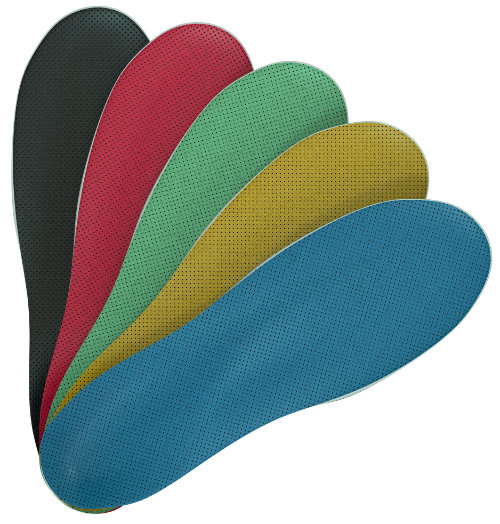
If you have been living with painful feet, it is possible you have stood in the drugstore in front of a wall of inserts and scratched your head trying to choose the best one. These shoe inserts that you can get at any pharmacy are pre-packaged types that you slip inside your shoes. Several kinds are available depending on what sort of pain you are experiencing and where you need extra support.
They are usually “one size fits all,” but they can provide some help in alleviating discomfort. If you have flat feet they can support your arch with extra cushioning and stabilization. The fat pad on your heel can thin over time, but an insert can provide that extra padding to keep your feet comfortable. They may be okay for alleviating some symptoms on a day-to-day basis, but you can’t count on them to fix long-term problems or biomechanical issues with your feet.
Custom orthotics are a cut above the typical store-bought kind, as they are prescription inserts that are specially made for your feet. Using a mold or digital technology, they are crafted to your foot contours to provide support, stability and cushioning where needed. Some control motion, and others function just to boost support.
In our office, bursitis, plantar fasciitis, tendinitis, bunions, diabetic foot ulcers, and heel pain are often helped with the use of custom orthotics. Contact Kevin J. Powers, DPM if you have questions and would like to see if orthotics can help you. Call our office in Bloomington, IN at (812) 333-4422.
Lumps and bumps are generally annoyances that we have to deal with. Feeling your teeth chatter as you drive down a bumpy road or a sore back after a night on a lumpy mattress can’t always be avoided. Seeing a lump or bump on your body, however, can be alarming, and you should find out what has caused it. It could simply be swollen tissue from getting hit by something, but in your feet it could be a condition called a ganglion cyst.
A ganglion cyst is a fluid-filled, non-cancerous lump that forms along the joints or tendons in your feet. They are also often seen in the wrist and hands. They are usually round in shape and mostly around the size of pea although larger ones can be up to an inch in diameter. If they are pressing on a nerve they can be painful, and if located in the right spot, they can interfere with the natural movement of a joint. Unfortunately, ganglion cyst causes cannot usually be identified; they are often “idiopathic,” which means we don’t know why they form. They develop and grow out of a joint or from the lining of a tendon and seem to occur when trauma damages the tissue of a joint or tendon or in association with the presence of osteoarthritis. It is also believed that they may develop when there is a structural flaw in the joint capsule. They commonly occur in those between the ages of 20-30.
Dr. Kevin Powers will be able to use imaging tests to confirm the diagnosis of this type of cyst, and fortunately a ganglion cyst tends to rupture naturally and go away on its own without treatment. If it is painful, immobilization, aspiration (draining fluid), or surgery to remove the cyst may be necessary. If you have any concerns about a bump on your foot, contact Kevin J. Powers, DPM for treatment. Call our office in Bloomington, IN at (812) 333-4422.
Photo Credit: Alexis via Pixabay.com
 What do you do on a rainy day in the summer with the family at home? Go find a great music concert! Check out Summer Jam at the Buskirk-Chumley Theater in Bloomington, IN. Rock out and dance the night away at this family-friendly show with loads of great music and talent. If you have painful bunions on the other hand, you may not want to step foot on a dance floor period. We don’t want our patients being hindered by foot pain, so here are some easy bunion exercises that you can do right at home.
Start by sitting in a comfy chair with your feet flat on the floor. Place twenty marbles on the floor and use your toes to pick them up one by one and drop them into a bowl next to your feet. Place a golf ball under your foot and roll it around underneath for a couple of minutes to help with cramping and foot strain. Massaging your foot with a frozen water bottle is also effective. Next, point and then curl your toes under ten times in a row for a good toe stretch. Bring one foot up over to rest on the other knee and gently stretch your big toe back into proper alignment. Hold it there for ten seconds and then repeat this four times on each foot. Now, wrap a towel or resistance band around your big toe and press down with your toe while you pull back. Last, press your toes flat against a wall to flex and stretch them. Hold the position for ten seconds and repeat several times before switching feet.
Bunions are often progressive and will get worse if you don’t care for your feet. Do these bunion exercises at home, wear good, supportive shoes, and see us if your pain persists. Contact Kevin J. Powers, DPM for conservative treatment options that will keep your feet healthy and pain-free on the dance floor, and all day long. Call our Bloomington, IN, office at (812) 333-4422 or use our contact page online to reach us.
Photo Credit: David Mark via Pixabay.com
Being on a high profile team such as Notre Dame’s Fighting Irish brings high reward but can also bring high risks, especially with foot and ankle health. Junior Sheldon Day, defensive lineman, knows this well as he battled a high ankle sprain for most of 2013. He’s back in, strong, and ready to score while helping his teammates on the defensive line. Now, he will just have to be extra cautious and careful to protect against a secondary sprain. A sprain can happen in an instant. Whether or not you’re an athlete, you can keep your ankles strong and prevent ankle sprains with these four easy tips.
First, weak muscles around the ankle joint need to be strengthened so they can withstand the stresses put on the ankle. A really easy strengthening exercise that you can do while watching TV is wrap a towel around the bottom of your foot and pull tight so there is some resistance. Move your ankle up and down, in and out several times and then switch feet. Do this a few times a day.
Second, improve your balance so your body is more capable of controlling itself. Do this by balancing on one foot. Work up to a few minutes and then progress to standing with your eyes closed and on a pillow for extra challenge.
Third, be prepared for whatever activity you are going to do. This involves wearing appropriate footwear that fit your feet and building up your fitness level slowly if you are new to a sport. Playing within your current limitations will greatly help avoid injury.
Last, if you have already lived through a sprain, it may be helpful to use a brace or taping for extra protection and ankle stability. If your ankle feels weak, take a break and seek further treatment before another injury occurs that could be worse than the first.
If you are concerned about ankle instability, have a sprain that needs treatment, or sustained an injury that is not healing well, don’t wait to seek treatment. Contact Dr. Kevin Powers at our office in Bloomington, IN, by calling (812) 333-4422.
Photo Credit: Samarttiw via FreeDigitalPhotos.net
The beauty around Bloomington, IN, provides a natural playground for a host of summer activities. When you have a day off, what do you like to do outdoors? Hiking, cycling, fishing, boating, and more are at your fingertips—you just need to get outside and go! If you have nagging pain in the ball of your foot though, traipsing around outside may be the last thing on your mind. It is possible you have an injury called Morton’s neuroma, but it doesn’t have to stop you from staying active.

Morton’s neuroma involves an inflamed nerve in the ball of the foot, usually between the third and fourth toe. The pain and discomfort comes when it is being pressed on and aggravated by the surrounding bones. This injury can be caused by wearing ill-fitting shoes that put pressure on the ball of the foot, such as high heels. Being involved in an activity like running, which puts repetitive impact on the area, is also a culprit. Experiencing numbness in your toes or feeling a burning sensation in the ball of your foot are signs you may have Morton’s neuroma. It is typically treated with rest, ice, and avoiding high impact activities that accentuate the problem. You don’t have to give up all cardio, though, while your foot heals—you just want to avoid those with repetitive stress on your foot from striking the ground. Swimming, cycling, yoga, Pilates, and elliptical and rowing machines are all great substitutions when you need to give your feet a bit of a break.
If you are an athlete, you may be tempted to just push through the nerve pain, but if you have problems with your foot health, don’t play around. Many injuries and conditions only worsen without proper treatment, and leaving a problem until only surgery can repair it is a less than desirable outcome. Contact Kevin J. Powers, DPM for expert advice and effective treatment. Stop by our office in Bloomington, IN, or call (812) 333-4422 for an appointment today.


